Betty Matthiessen Wildlife Sanctuary Guide
The H. L. Ferguson Museum and Land Trust manages close to 400 acres of natural habitat for enjoyment by Fishers Island residents and guests. The Betty Matthiessen Wildlife Sanctuary is a remarkable 7.2-acre part of the Museum’s Land Trust, given to the Museum in memory of Elizabeth C. Matthiessen by her husband, Erard A. “Matty” Matthiessen, and her son, Peter Matthiessen. Betty Matthiessen, a longtime resident of Fishers Island, loved the Island and its wildlife and took an active interest in the Museum. A printed trail guide was originally written in 1988 by Penelope C. Sharp and Carey Matthiessen with illustrations by Charles B. Ferguson. In 2025, the second edition was significantly updated and expanded by Connecticut-based naturalist Margarett L. “Maggie” Jones.
Like the printed version, this online guide will acquaint visitors with the representative flora and fauna of Fishers Island. Most of the plants and animals in the sanctuary are found elsewhere on the Island. However, the sanctuary peninsula, containing a small freshwater pond surrounded by the marine environment of Island Pond, provides a diverse combination of terrestrial and aquatic life in a relatively small area. Until 1938, Island Pond was a freshwater pond used as a supplementary reservoir to help service the Island’s water requirements. The Hurricane of 1938’s immense storm surge washed over the barrier beach and flooded Island Pond and adjacent Beach Pond with salt water, instantly turning them brackish. The saltwater intrusion changed the plant and animal communities from freshwater species, like large-mouthed bass and pumpkinseeds, to salt-tolerant mummichogs, pipefish, and sticklebacks. It also allowed for colonization by invertebrates such as oysters and softshell clams, giving Island Pond a secondary moniker of Oyster Pond.
Since 1938, Island Pond has remained brackish despite attempts to restore it as a freshwater source. Seawater that enters the pond from the ocean during winter storms or extreme high tides is diluted by rainfall and groundwater. During much of the year, the pond is closed to the sea, and the salt concentration may drop to less than one-half that of Block Island Sound. As a result, many aquatic species found in the Sound cannot establish populations in the pond. The relatively few species capable of tolerating the brackish environment may occur in extremely high numbers because many of their normal predators and competitors are excluded. The evolution of Island Pond continues in response to climate change, as rising sea levels, more frequent storms, warming temperatures, and changing ocean currents alter the structure of the protective barrier beach and open the pond to the ocean.
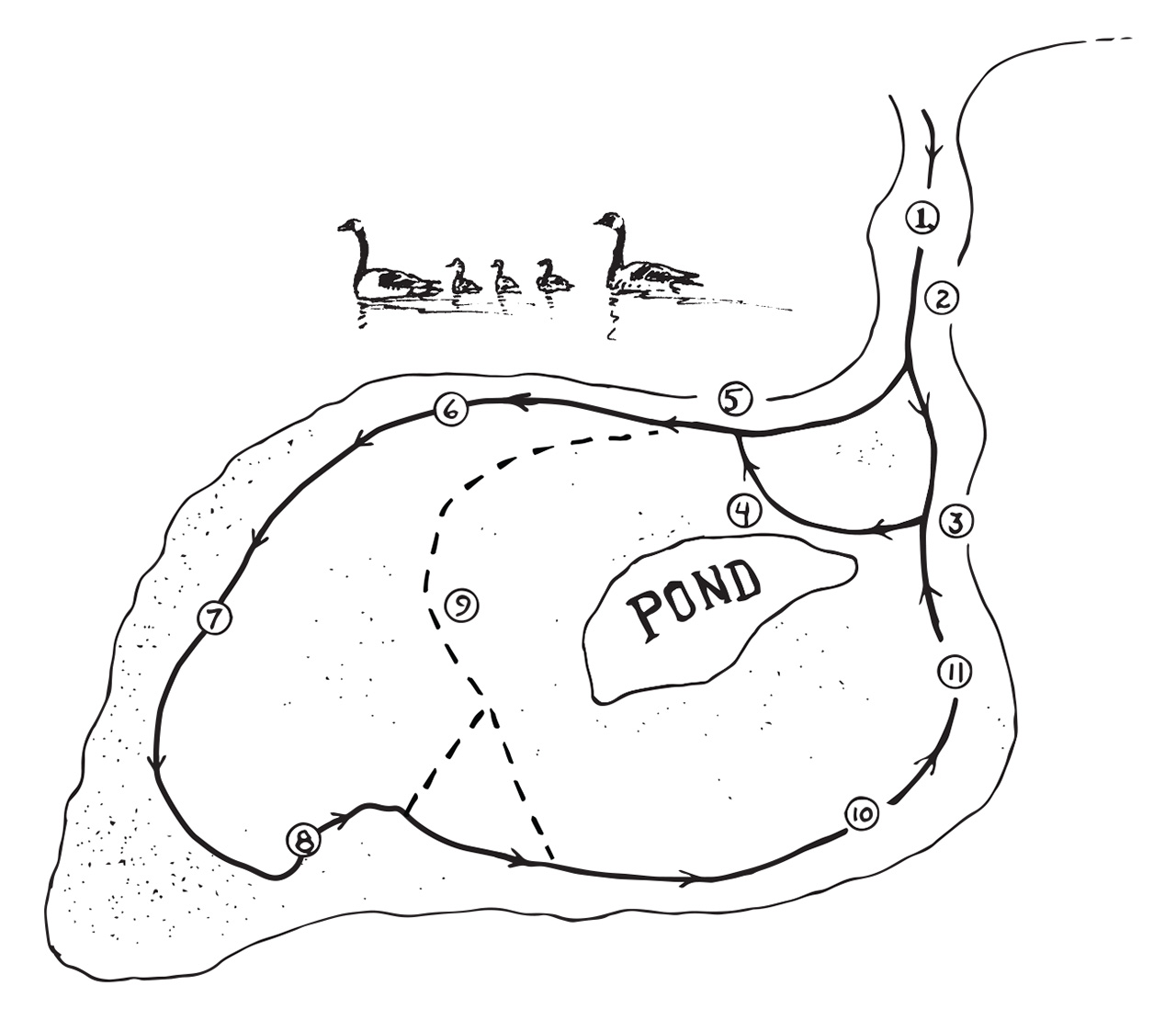
The Betty Matthiessen Wildlife Sanctuary lies west of the driving range, approached via a small lane shared with the Fishers Island Oyster Farm. This lane creates a narrow isthmus, allowing access to what was once an island. Tall native shrubs, including bayberry, blueberry, azalea, and sumac, shade the laneway across Island Pond—where oysters are spawned and grown—to the trailhead. In spring, you may be greeted by Baltimore Orioles and Gray Catbirds nesting in overhanging trees and thickets. As you follow the trail indicated on the map, remember that oysters and many other species you may (or may not) see, both on land and in the water, thrive best in this transition zone between land and sea.