STATION VIII
Betty Matthiessen Wildlife Sanctuary
This station offers an excellent view of the outer pond, barrier beach, and the channel that links Island Pond with Beach Pond and Block Island Sound, where distant windmills can be seen on a clear day. After the Hurricane of 1938, a pump was installed on the far shore to pump the salt water out so the pond could recharge with rainfall and groundwater. By September 1940, Island Pond had almost regained its freshwater status when a new hurricane reintroduced saltwater into the pond. The restoration effort was subsequently abandoned. Another major hurricane in September 1944 was likely responsible for the initial cut through the barrier beach and the channel between Island and Beach ponds.
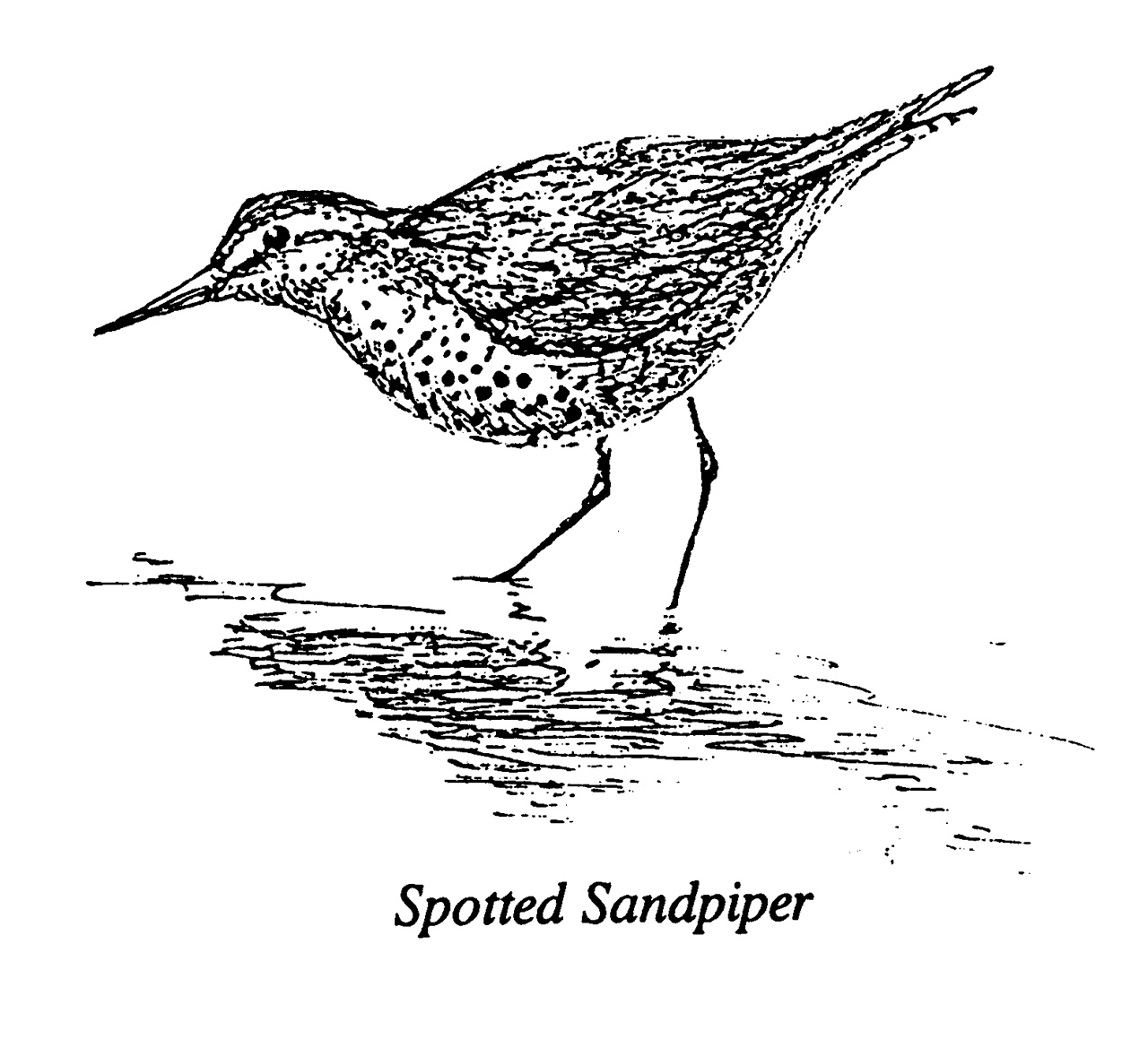
Across the pond, vegetation marks the land edge of a barrier beach that offers nesting habitat for American Oystercatcher and the federally threatened Piping Plover. During migration, sandpipers, Dunlin, dowitchers, and many shorebirds stop here to feed. Double-crested Cormorants dry their wings from atop rocky perches, and Common Eider and scoters dive for blue mussels and other shellfish, which they swallow whole. Common Eider, the largest sea duck in the Northern Hemisphere, can be spotted year-round, as a small colony nests along the rocky island shore.
Island Pond offers ideal conditions for oyster-culture. Relatively few species can tolerate the wide range in salinity (salt concentration) found in Island Pond. Salinity fluctuates with rainfall, extreme tides, and storms. During hurricanes, seawater may wash over the barrier beach, flooding the pond with high-salinity water. When the pond breachway fills with sand and closes, freshwater from rainfall accumulates and gradually dilutes the salt concentration.
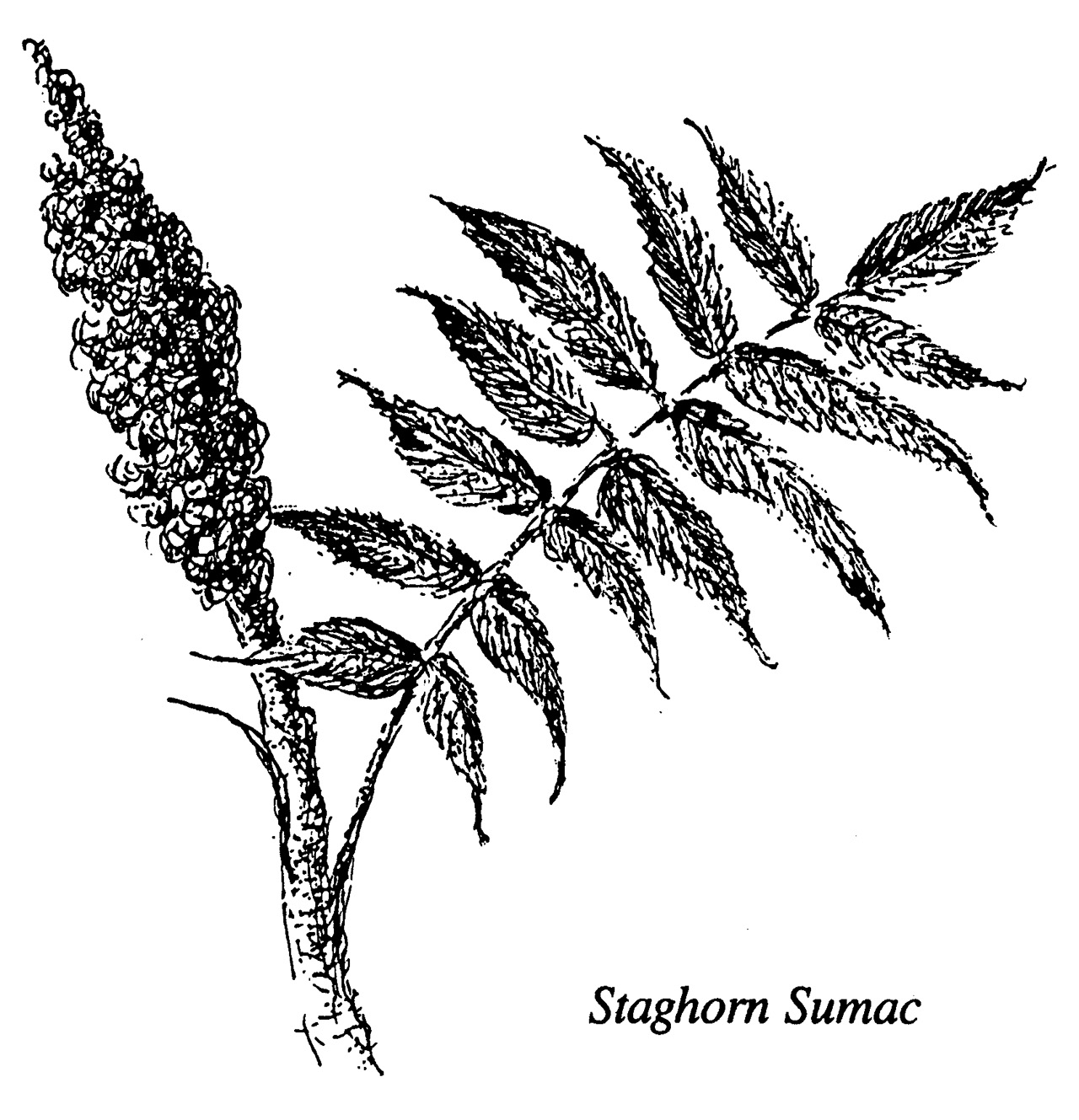
Several species of sumac occur around the Island, especially staghorn sumac, one of the most common small trees of the northeastern United States. It is readily identified by its downy branches that resemble the velvety antlers of a stag. Sumacs are dioecious (male and female flowers are born on separate plants) members of the cashew family with alternate, compound leaves and toothed leaflets. Sumacs are distinctive throughout the year as showy, dense terminal clusters of bright red berries persist on female plants.
Staghorn sumac should not be confused with poison sumac, which prefers bogs and does not occur in the Sanctuary (or on Fishers Island). Like poison ivy, its cashew family relative, poison sumac has white berries, while the female plants of staghorn sumac have large, showy red fruit clusters. Staghorn (and other sumacs on the Island) do not cause contact dermatitis and are not poisonous. In fact, the lemony fruits can be dried to make za’atar, a condiment used in Middle Eastern dishes, or steeped in water with sugar for sumac lemonade. Approximately 90 species of birds and many mammals feed on sumac berries, which are available year-round. Sumacs have been important native plants for wildlife and people for centuries.
Black cherry and crabapples take advantage of sunny openings in the young woods. In late April through May, the forest floor is covered with wild strawberry, starflower, and a continuous cover of Canada mayflower. Tufted Titmouse, Northern Cardinal, and Carolina Wren are common year-round resident birds.