STATION I
Betty Matthiessen Wildlife Sanctuary
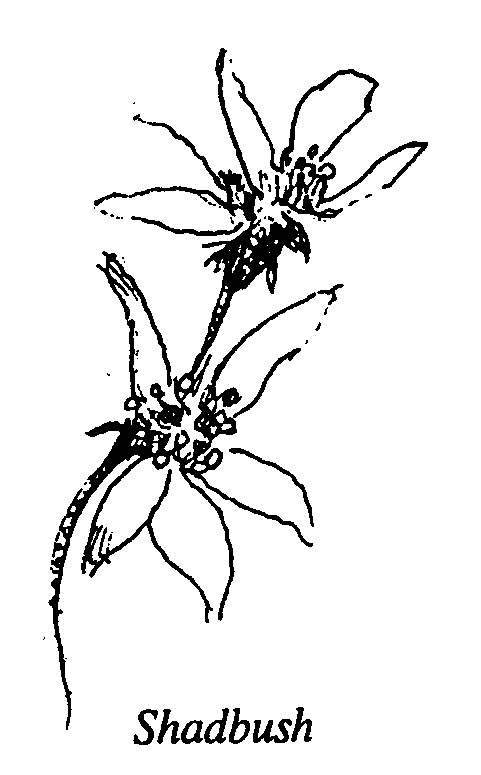
Springtime visitors to Fishers Island will notice shadbush, also called shadblow, juneberry, or serviceberry, blooming in late April and early May. Clusters of pinkish buds open to white flowers before the leaves emerge, enriching the landscape and reminding us that things will soon be green again.
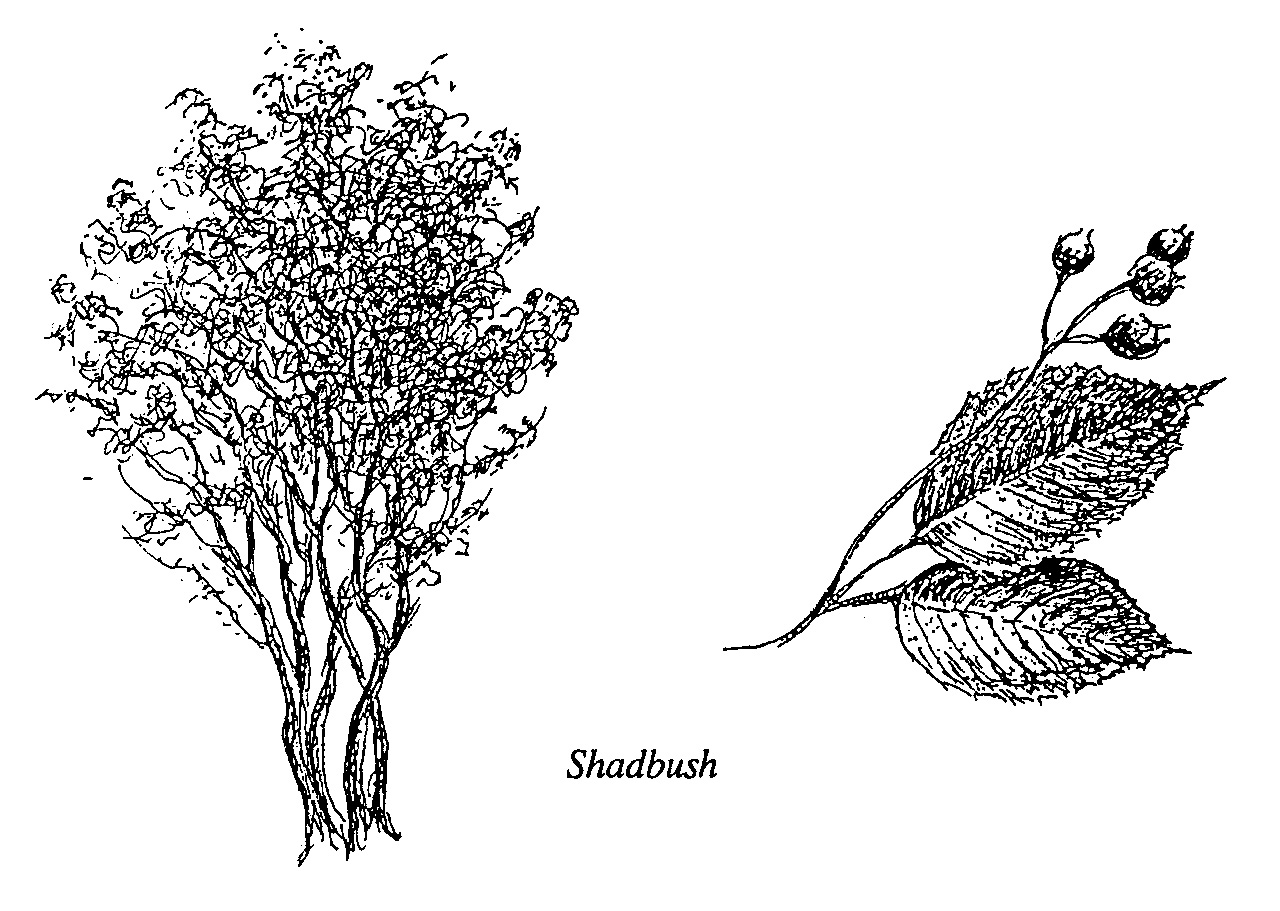
Shad is a common multi-stemmed shrub or small tree in coastal areas. The appearance of its flower coincides with the annual upriver migration of shad—a fish species in the herring family—to their spawning grounds. The common name serviceberry signals a time to bury the dead because it blooms after the ground has thawed.
When not in flower, the tree can be recognized by its smooth, light gray bark with pale longitudinal striations. Shadbush is in the rose family and has small, oblong, finely toothed leaves. Its rosy blue/black fruits ripen in June before most other native fruits. They are delicious but seldom found, as birds are quick to consume them. Raccoons and squirrels also enjoy these early-season fruits. Rabbits, and occasionally deer, browse the twigs. Deer swimming from the mainland across to Fishers Island have not established a breeding population due to hunters’ vigilance. Their absence helps maintain the delicate balance of our Island’s ecosystem.
Growing in association with shad is highbush blueberry, a native shrub that is widespread on Fishers Island. The tiny bell-shaped flowers are important to bees, butterflies, and other pollinators for pollen and nectar. They also attract Ruby-throated Hummingbirds returning from their wintering grounds. Watch and listen for Common Yellowthroat, American Redstart, and Great Crested Flycatcher, insect-eating birds that arrive on the island in mid-spring and stay through the nesting season.
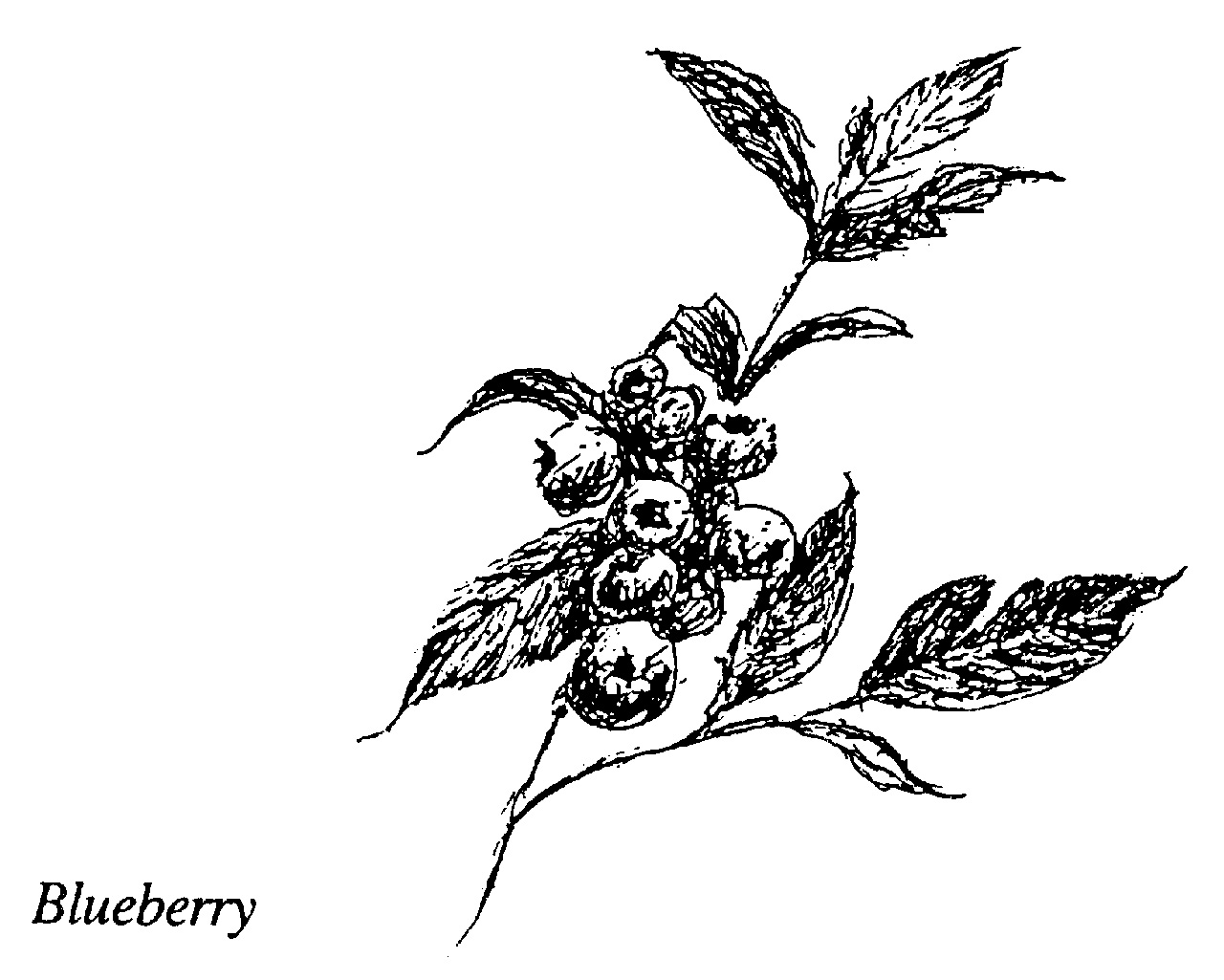
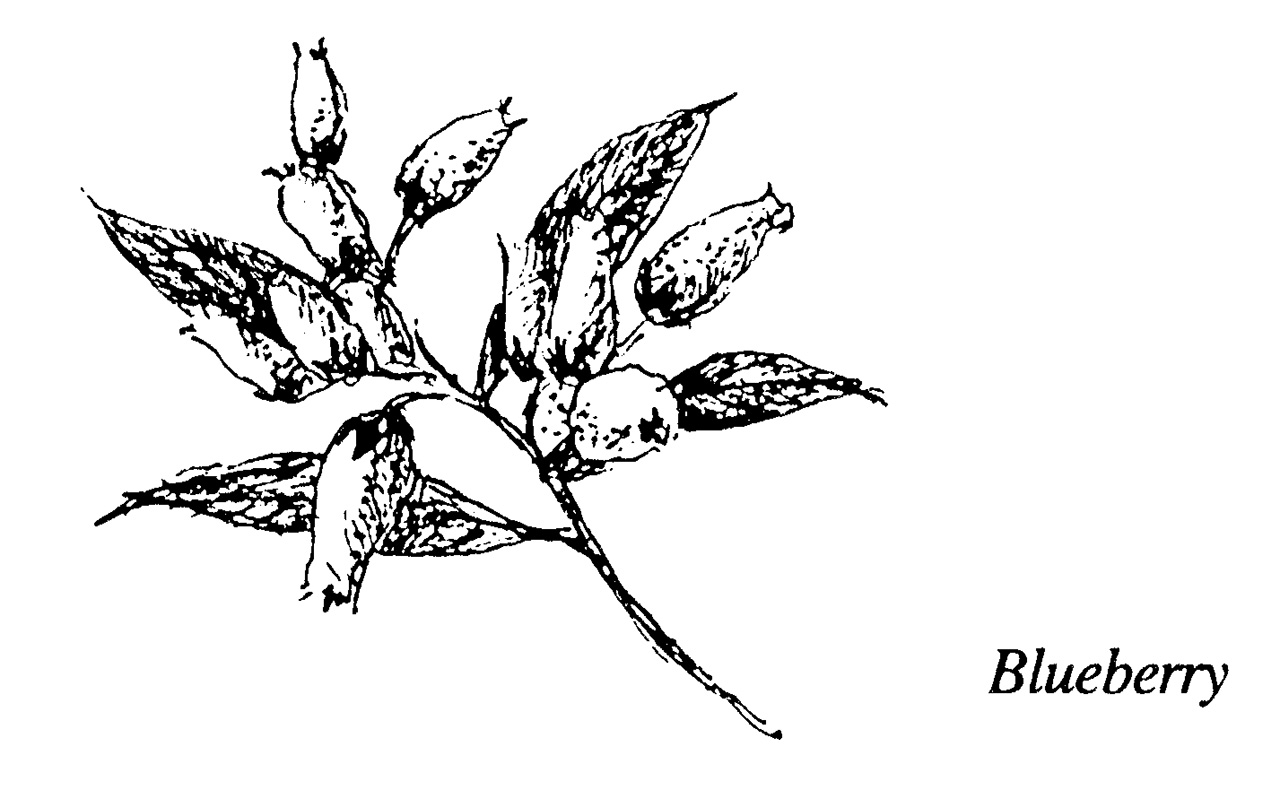
Highbush blueberry can be recognized by its gnarly, twisted older stems, reddish zig-zag twigs, and elliptical leaves with smooth margins. The small, waxy, pink-to-white flowers occur in clusters at the ends of branches during late April and May. Dark blue berries ripen in early July, though catbirds and others will eat the unripe green fruit. Blueberries are an important food source for birds and mammals and are quickly consumed. Game birds and small mammals nibble on twigs and leaves. This shrub prefers acidic soil and is generally found in freshwater swamps, bogs, and damp woods. It is particularly handsome in the fall when the leaves turn a rich, deep red.
Several species of non-native invasive plants have become established along the trails, especially bush honeysuckles. These dense shrubs have opposite leaves, hollow branchlets, and small white or pink flowers in May and June, followed by juicy orange-red or yellow berries in summer. Several species of birds eat the fruit, contributing to the spread of this aggressive shrub, which outcompetes native species and should not be intentionally planted.
Poison ivy, a member of the cashew family, grows along the trail and is common island-wide. Learn to identify it before you walk through woods and fields.
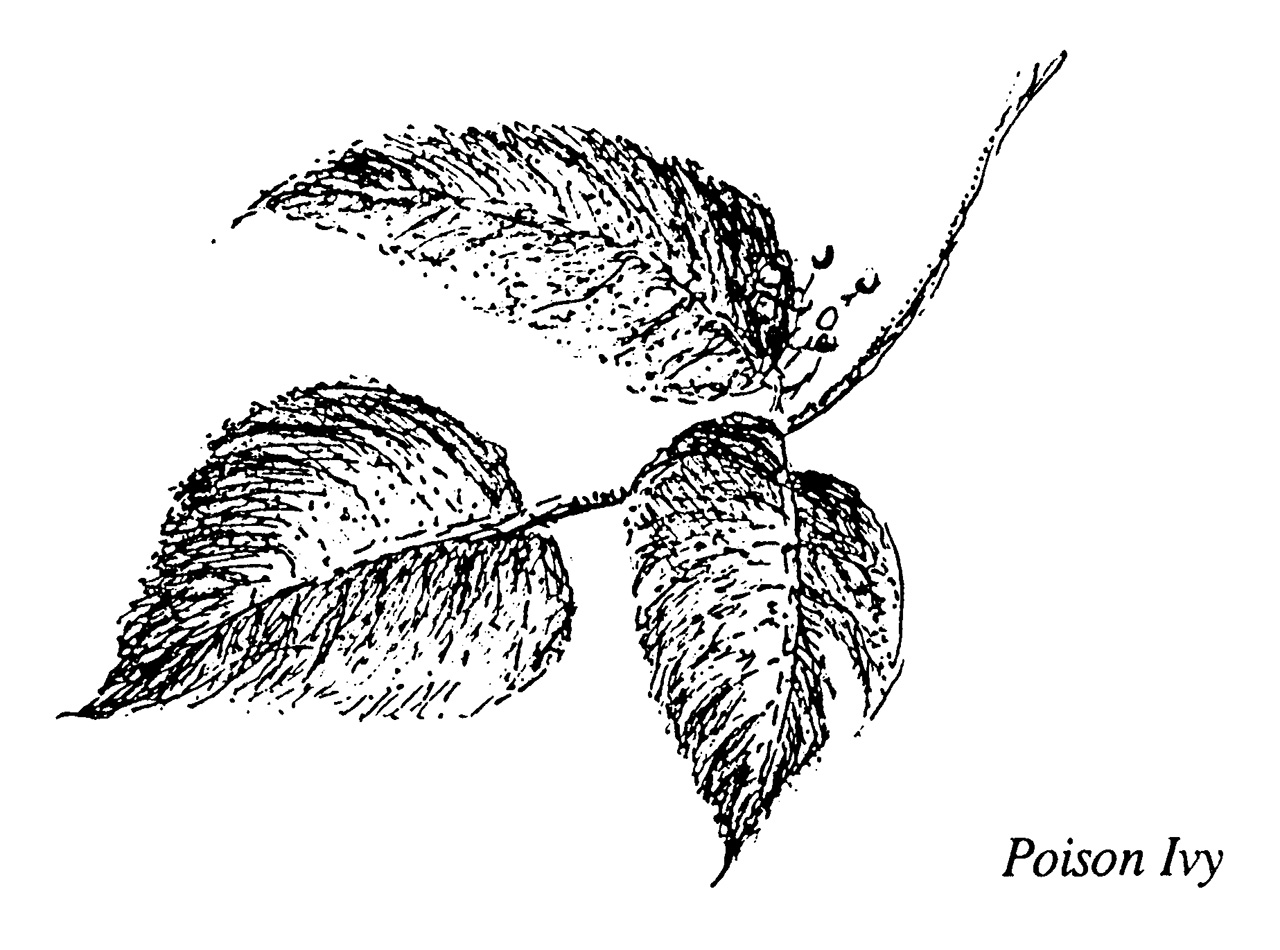
Contact with leaves, roots, or stems can produce a severe allergic reaction in some individuals, typically an itchy skin rash accompanied by blisters. The degree of susceptibility varies, but even those claiming immunity do best to avoid contact with the plant. Its poisonous properties are attributed to urushiol, a volatile oil that can rub off on clothing, pet fur, tools, or anything that touches the plant. The oil is easily washed off with soap and water within twenty-four hours of contact (before symptoms appear), but the best protection is avoidance.
Poison ivy is a woody climbing vine, ground cover, or (especially along the shore) gangly shrub. Its leaves can be quite variable, shiny, or dull, with either straight or wavy margins. Perhaps the most characteristic feature is aerial rootlets that give the vines a “hairy” appearance unlike any other plant. While its small yellow-green flowers are seldom noticed, poison ivy leaves turn deep crimson in fall, showing off clusters of white fruits. During the early years of American settlement, the plant was brought back to England as an ornamental because of its attractive shiny foliage. “Leaves of three, let it be” is a good motto to keep in mind, although poison ivy can be confused with dewberry (a low trailing prickly vine) and wild sarsaparilla (a native wildflower in the ginseng family) that grow in the forest understory.
Poison ivy is a native species and should not be removed from natural landscapes. The vines offer excellent cover and the fruit is enjoyed by over 60 species of birds, which carry undigested seeds long distances.