STATION X
Betty Matthiessen Wildlife Sanctuary
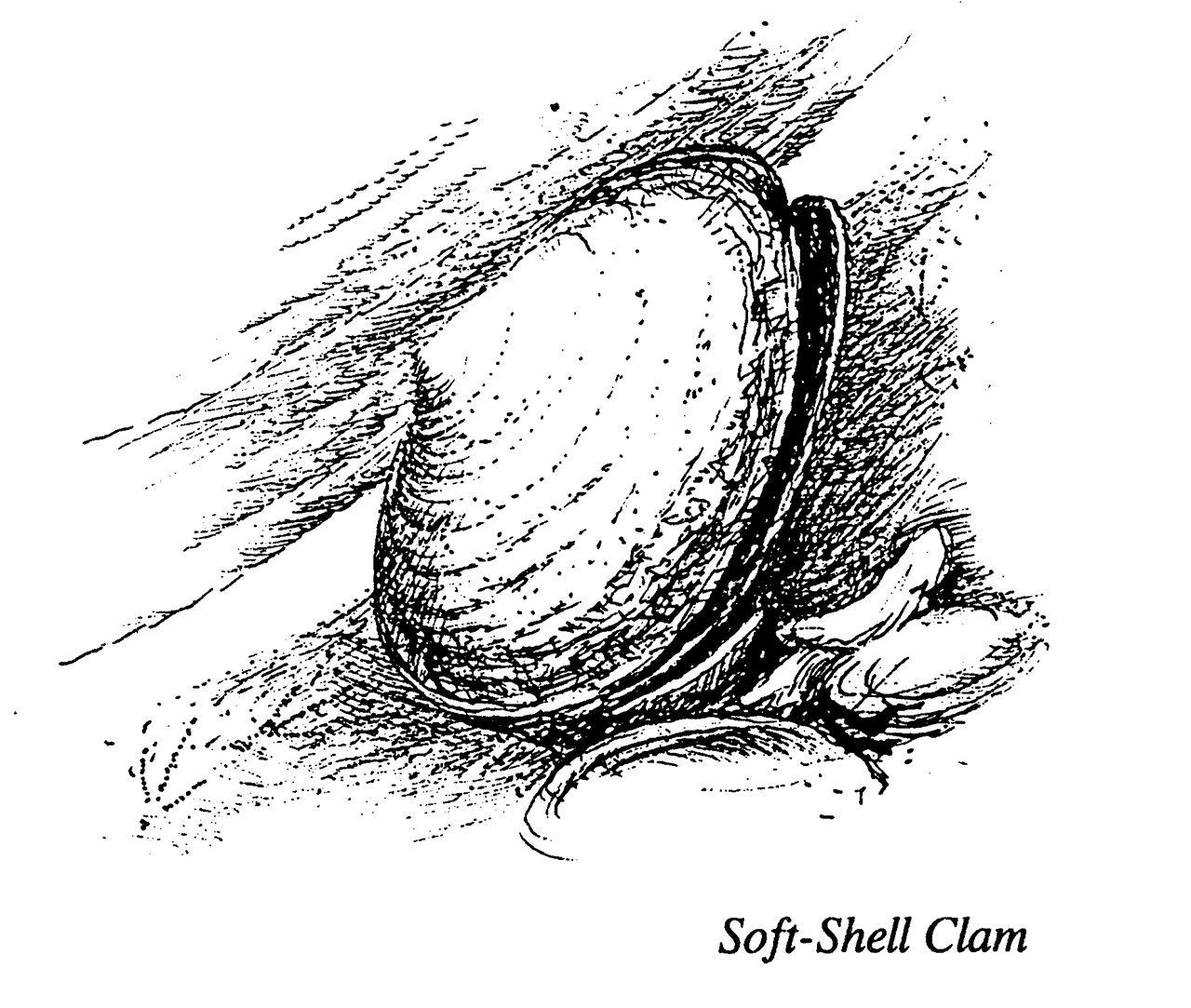
Dwarf dandelion grows in the dry soil at this station overlooking Island Pond. Relatively few species are capable of withstanding the environmental extremes of fluctuating salinity and temperature typical of brackish water environments, and those that can adapt may occur in large numbers. Two species that flourish in the pond environment in the absence of predators are the American oyster and the softshell clam, or steamer.
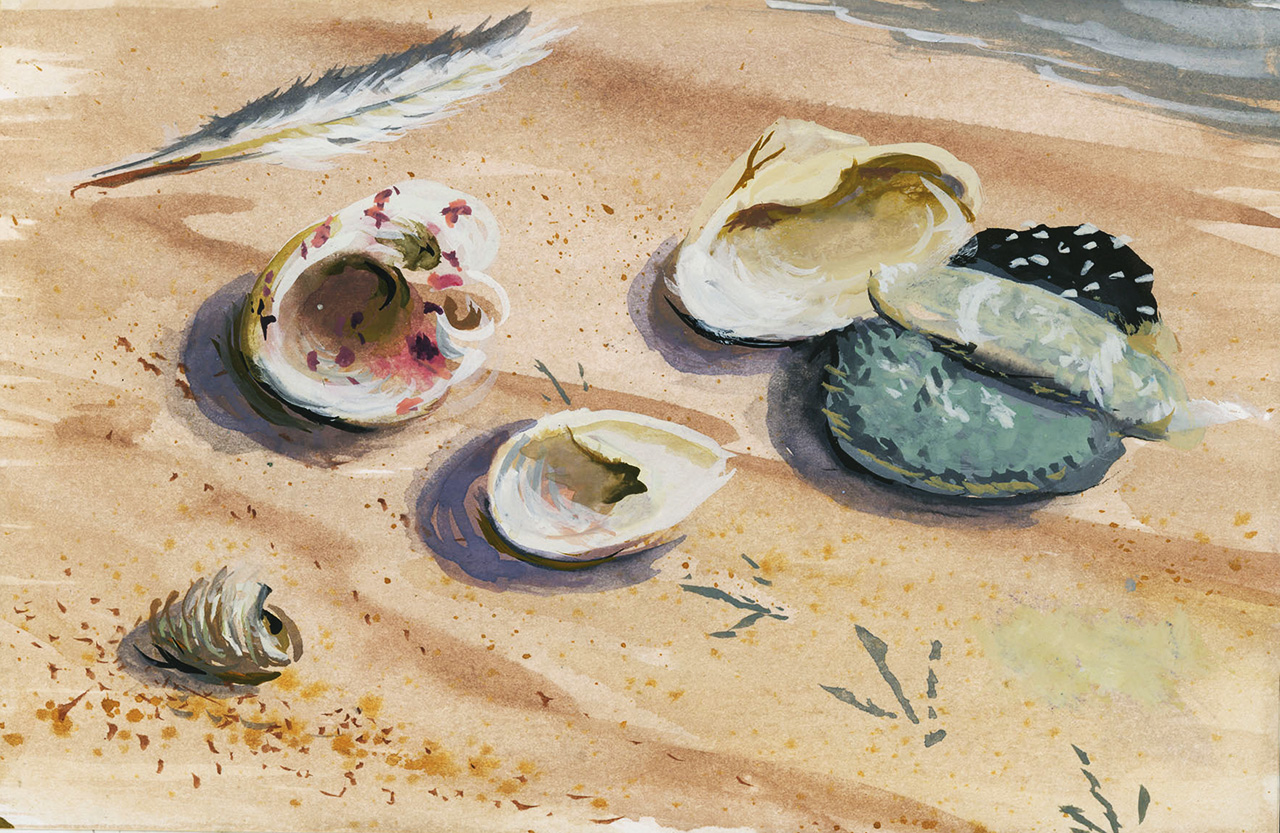
The oyster lives on the bottom, usually attached to rocks or other oysters, and can be observed along the pond shoreline. Here though, look also for the Fishers Island Oyster Farm’s long-lines, from which pearl nets full of oysters are suspended away from predators. Less obvious is the clam, which buries several inches beneath the surface of the bottom sediment and can be detected by its siphon hole. In a typical marine environment, both species of bivalve mollusks are vulnerable to a variety of predators. Sea stars and Atlantic oyster drill are major predators of the oyster, while green crabs and horseshoe crabs feed on softshell clams. These predators are scarce or absent in the pond, and healthy populations of oysters and clams dominate the bottom community.
Clams and oysters are filter feeders, obtaining food in the form of floating microscopic plants (phytoplankton) or tiny particles of organic detritus from the surrounding water. During the spawning season, in early summer, these mollusks shed millions of eggs and sperm into the water and each fertilized egg develops into a tiny free-swimming larva. After drifting around for about two weeks, the larvae settle to the bottom. The juvenile oyster cements itself to a hard surface such as a rock or piece of shell, where it remains for the remainder of its life. In contrast, the baby clam burrows into the sediment; although capable of moving limited distances, the clam also remains relatively stationary throughout its life.

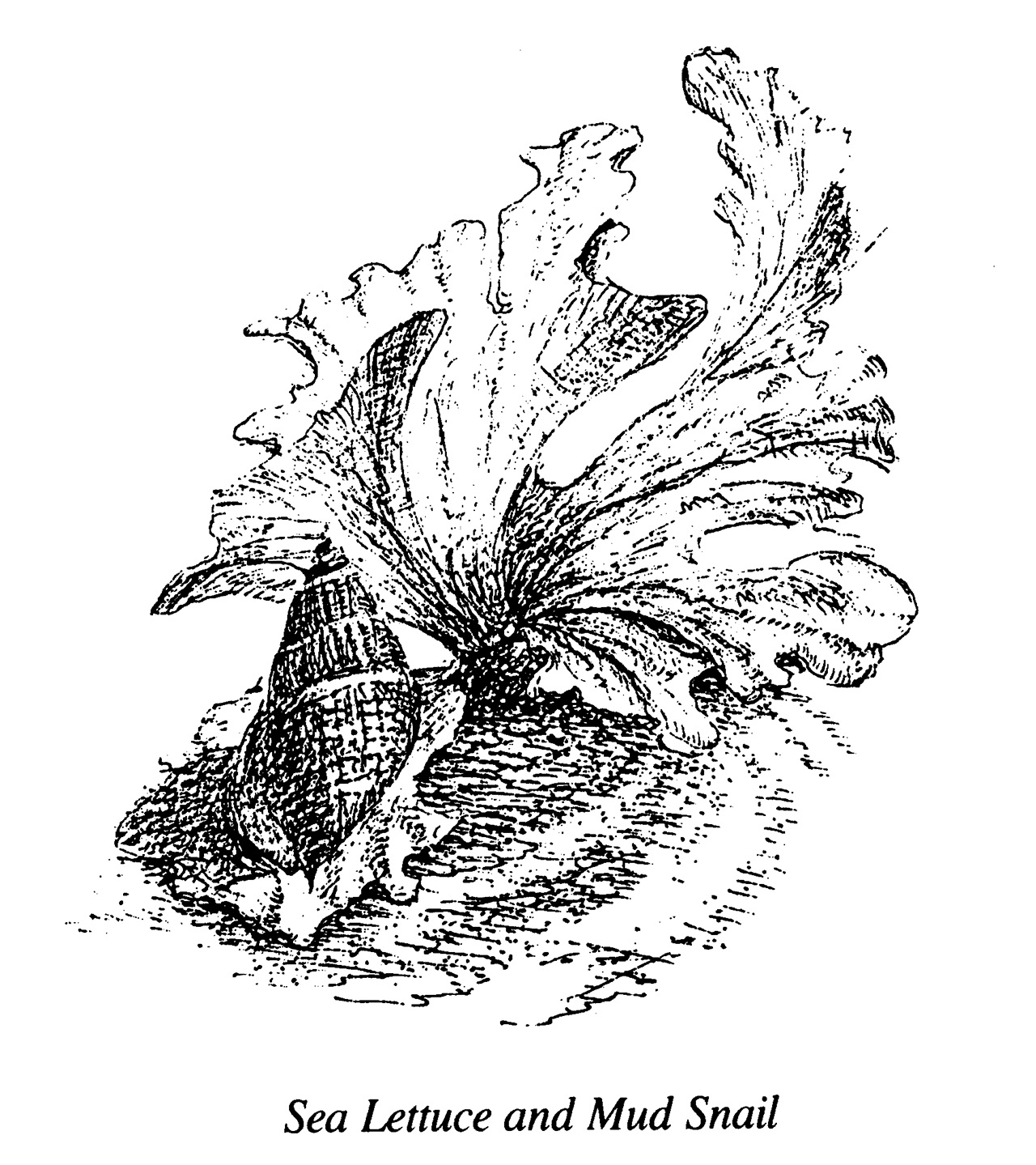
During the past decade, diamondback terrapin, a salt-tolerant turtle, has rebounded after being hunted and marketed to near extinction for terrapin soup. These beautiful turtles live in brackish and salt water in coastal marshes and estuaries. In June, they leave the water to lay eggs on sandy beaches and marshes. They feed on invertebrates, fish, crustaceans, and mollusks, including the mud dog whelk, a mollusk that thrives in the pond environment. This small, dark-colored snail is abundant in shallow water, where it feeds primarily upon organic detritus. It deposits eggs in small transparent capsules attached to stones, logs, oyster shells, or even blades of eelgrass. The larvae emerge and undergo a brief planktonic existence before settling to the bottom. The mud dog whelk is an active scavenger and carrion-feeder, quickly detecting and devouring dead animals on the bottom.
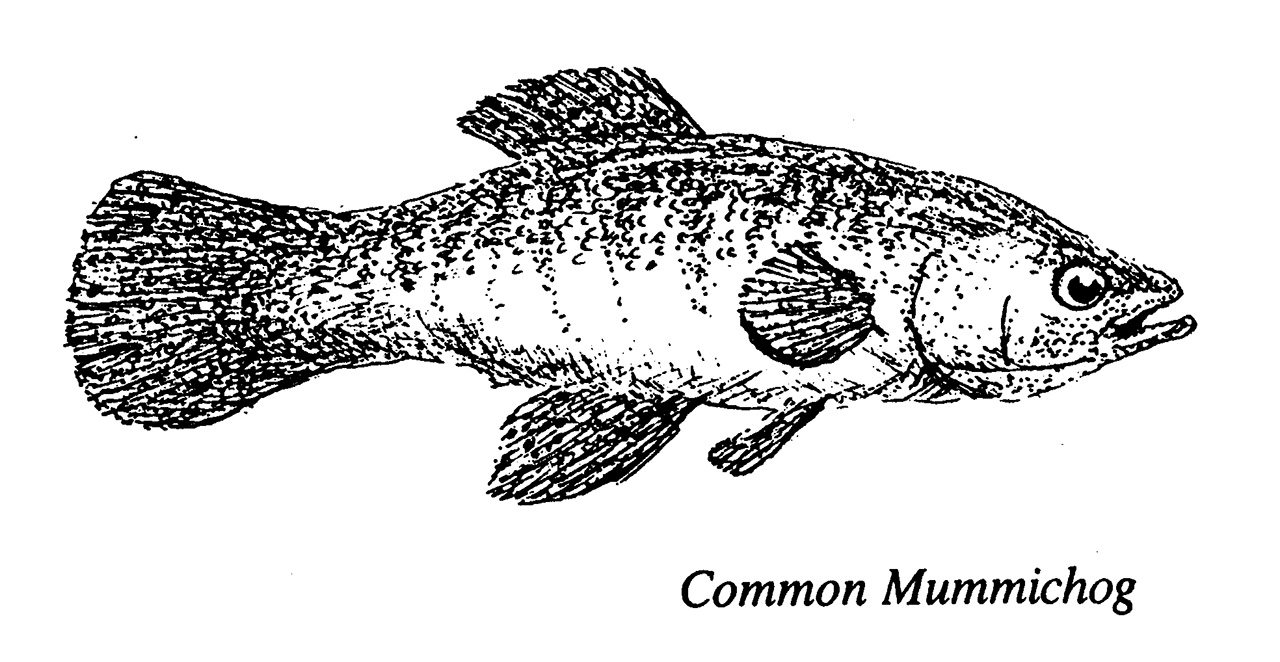
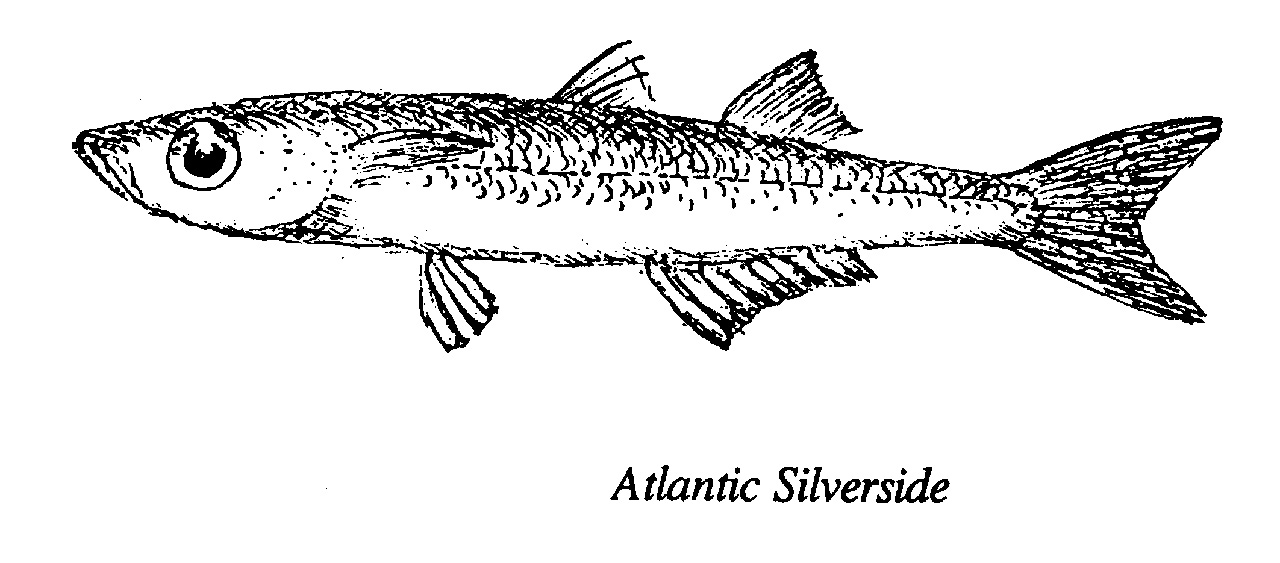
Like mollusks, the finfish populations in the pond consist of a relatively small number of species that occur in high concentrations. The most abundant representatives are common mummichog (a type of killifish), three-spined stickleback, silverside, and white perch.
The mummichog is a hardy little fish, capable of tolerating a wide range in salinity, temperature, and extremes in oxygen concentration. They feed upon small shrimp, algae, and insect larvae, helping to reduce local mosquito populations. During the winter, they burrow into the mud.
A unique and distinctive habit of stickleback males is nest-building and care of the young. The male creates a nest using bits of eelgrass and marine plants stuck together with a sticky fluid produced by his kidneys, in which the female deposits her eggs. After fertilizing the eggs, the male guards the nest and young after they hatch. The stickleback, at only 2-3 inches in length, is aggressive for its small size.
A unique and distinctive habit of stickleback males is nest-building and care of the young. The male creates a nest using bits of eelgrass and marine plants stuck together with a sticky fluid produced by his kidneys, in which the female deposits her eggs. After fertilizing the eggs, the male guards the nest and young after they hatch. The stickleback, at only 2-3 inches in length, is aggressive for its small size.

The silverside is an important baitfish for larger predatory fish such as bluefish, striped bass, and white perch, along with terns, cormorants, and other seabirds. It is occasionally captured for human consumption. Silversides form dense schools, feeding upon small crustaceans, worms, and insects. Generally a small fish, exceptional individuals grow up to five inches in length.
The white perch is a common resident of brackish water ponds along much of the Atlantic coast. Closely related to the striped bass, the white perch also prefers to breed in waters of very low salinity. In the southern part of its range, including the Chesapeake Bay, white perch is of considerable commercial value, growing up to two pounds in weight.

Island Pond vegetation is restricted to a relatively small number of species, mostly because the brackish water excludes many marine algae, such as the kelps and rockweeds, which are abundant along the outer beach. The dominant bottom vegetation consists of two spermatophytes (seed plants): eelgrass and widgeon grass. Both these grass species provide food for a variety of waterfowl. Eelgrass in particular provides a favorable habitat for juvenile fish, mollusks, and crustaceans. The most abundant macroscopic algal species is sea lettuce, which tolerates a wide range of salinity and occurs chiefly during summer.
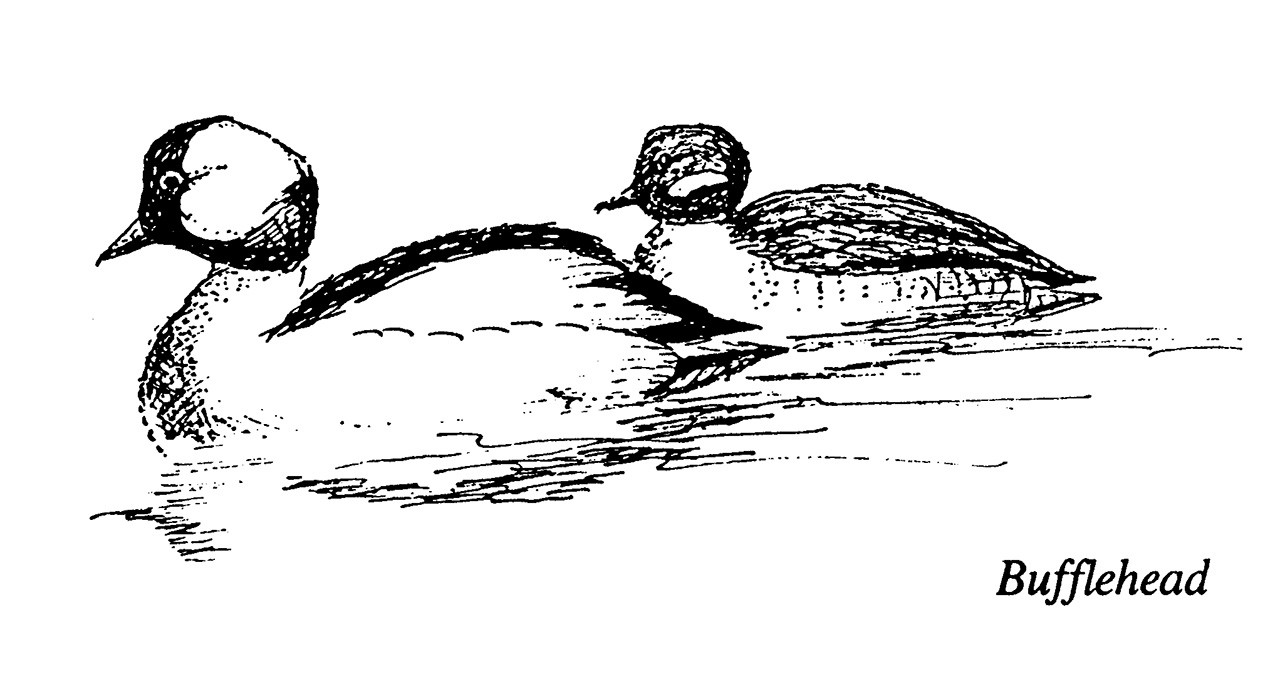
The pond habitat, vegetation, and abundance of small fish attract a variety of waterfowl. The most obvious of these are the Mute Swan and Canada Goose, along with Mallard and Black Duck, year-round residents that consume mostly aquatic plants. Birds that feed on fish include the Double-crested and Great Cormorant, Red-breasted Merganser, Hooded Merganser, Bufflehead, Pied-billed Grebe, Common Tern, and Osprey. The latter is capable of capturing large flounder, white perch, and blackfish. In recent years, increasing numbers of Bald Eagles are nesting on the mainland along the Connecticut, Thames, and Pawcatuck rivers. They fly across the Sound to Fishers and nearby islands to take advantage of concentrations of overwintering ducks. In the spring of 2025, a Bald Eagle nest was recorded on Fishers Island for the first time in modern history, though it remains to be seen if the nest will be productive.