STATION IX
Betty Matthiessen Wildlife Sanctuary
This station, perched above the small freshwater pond, marks a high point with distant tree line and water views. A patch of evergreen club moss or “princess pine” carpets the ground. Clubmosses are primitive, spore-producing vascular plants more closely related to ferns than mosses. The spores, born in upright clusters called strobili, are explosive and were used in early flash cameras.
Reconnecting to the main trail, notice two large American linden, or basswood, a native tree with distinctive heart-shaped, edible leaves and fragrant flowers. Horizontal rows of small holes in the bark were made by migrant Yellow-bellied Sapsuckers that return to these sap wells each spring and fall.
There are also many oaks in this area. Of all forest trees, oaks have particularly high ecological importance because of their value to insects, migrant birds, and overall forest and environmental health. Long-lived, they sequester more carbon than other tree species and are excellent soil stabilizers. Oaks support a diverse community of pollinators and a complex food web, making them one of the most important plant groups in the landscape.
In the United States, over 90 different animal species eat acorns, including mice, squirrels, towhees, flickers, Wood Duck, Red-bellied Woodpecker, and titmice. Blue Jays are major dispersers of acorns. Hundreds of different caterpillar and insect species depend on living and dead oak trees and leaves for food and habitat.
Twelve different oaks are native to our region, and several types grow on the Island. They are generally divided into two groups: white oaks and red oaks. Red oak leaves have bristle-tipped lobes, while the leaves of white oak species have rounded lobes. In most of the Island’s remaining natural forest, red oak is the dominant oak species. A tall, straight-growing tree with characteristic furrowed “ski-trail” bark, it grows on a wide variety of sites but does best in rich, well-drained soils. Its range extends farther north than any of the other oaks in its group.
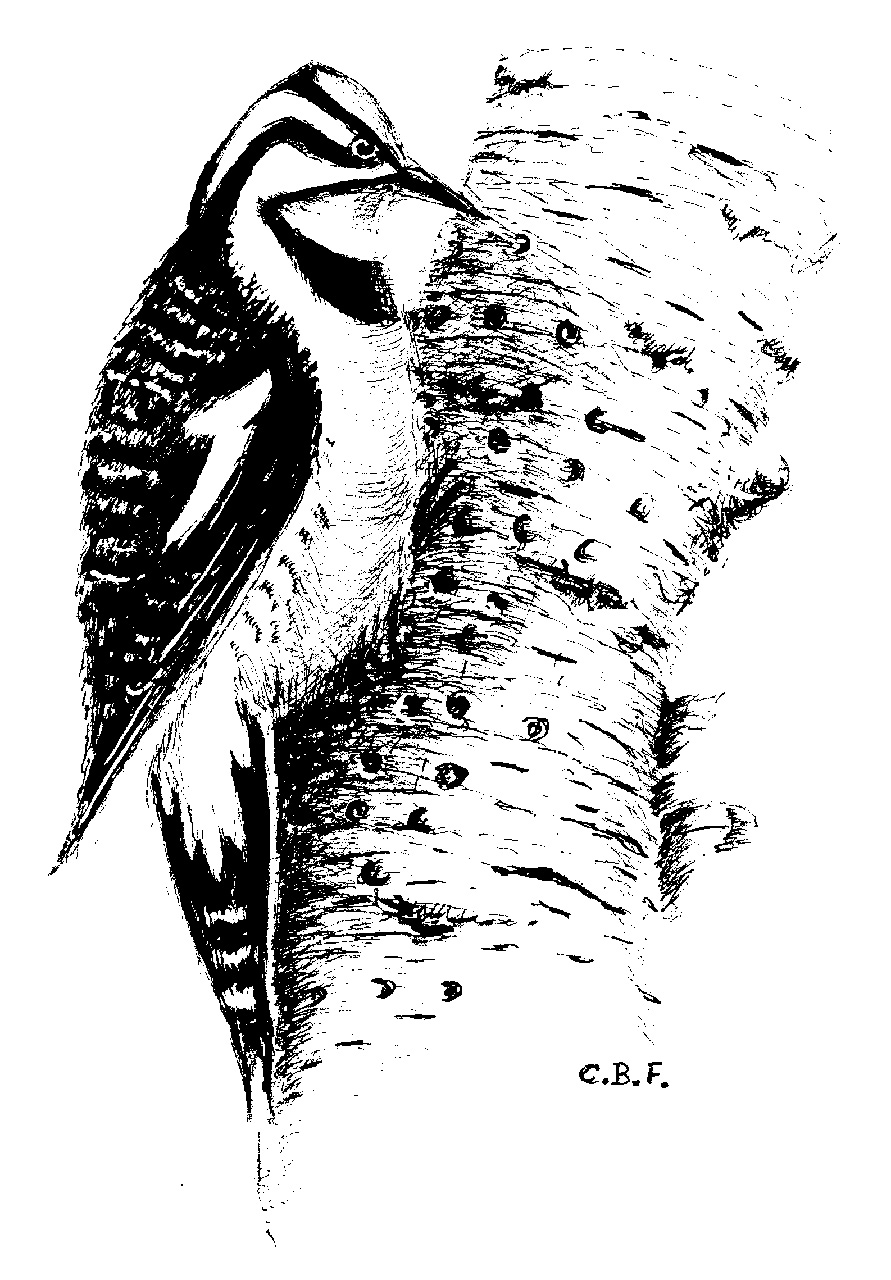
Yellow-bellied Sapsucker
(Sphyrapicus varius)
Red oaks may live 300 years or more and support a diversity of animals and insects, ranging from ants to wasps. Acorns of red oaks take two years to develop, and immature and mature acorns are present on trees at the same time. White oak acorns mature in one growing season. During mast years, oaks synchronize across the entire region, producing enough acorns so that many are buried and forgotten, ensuring trees for future generations.
Many oaks, especially white oaks, retain their leaves in winter (marcescence), possibly to protect the next season’s buds from browsing predators. Fallen oak leaves serve as a blanket that protects and nourishes the soil. Oak leaves take longer to decompose than maple or birch. Small insects and invertebrates depend on the fallen leaves for food and cover and recycle the nutrients needed by trees.
Many specialized relationships exist between oaks and insects. Tiny ants live in acorn shells emptied by acorn weevils. Cicadas, katydids, tree crickets, and a variety of leaf-eating caterpillars are a few of the other insects associated with oaks. They provide critical sustenance for migrant and breeding birds that split their time between the tropics and Eastern North America. Insect-eating birds, in turn, help keep insect populations in balance in this complex predator/prey relationship that is critical to forest health.
During spring, early blooming wildflowers appear on the forest floor at the base of oak trees, including wood and rue anemone, wild oats, lion’s foot, and starflower. The dark evergreen leaves of striped wintergreen and partridgeberry, a low creeping vine, can be found all year. Both plants have waxy white flowers in summer pollinated by insects, especially bumblebees. The tiny white partridgeberry flowers are borne in pairs, which fuse to form a sweet red fruit.
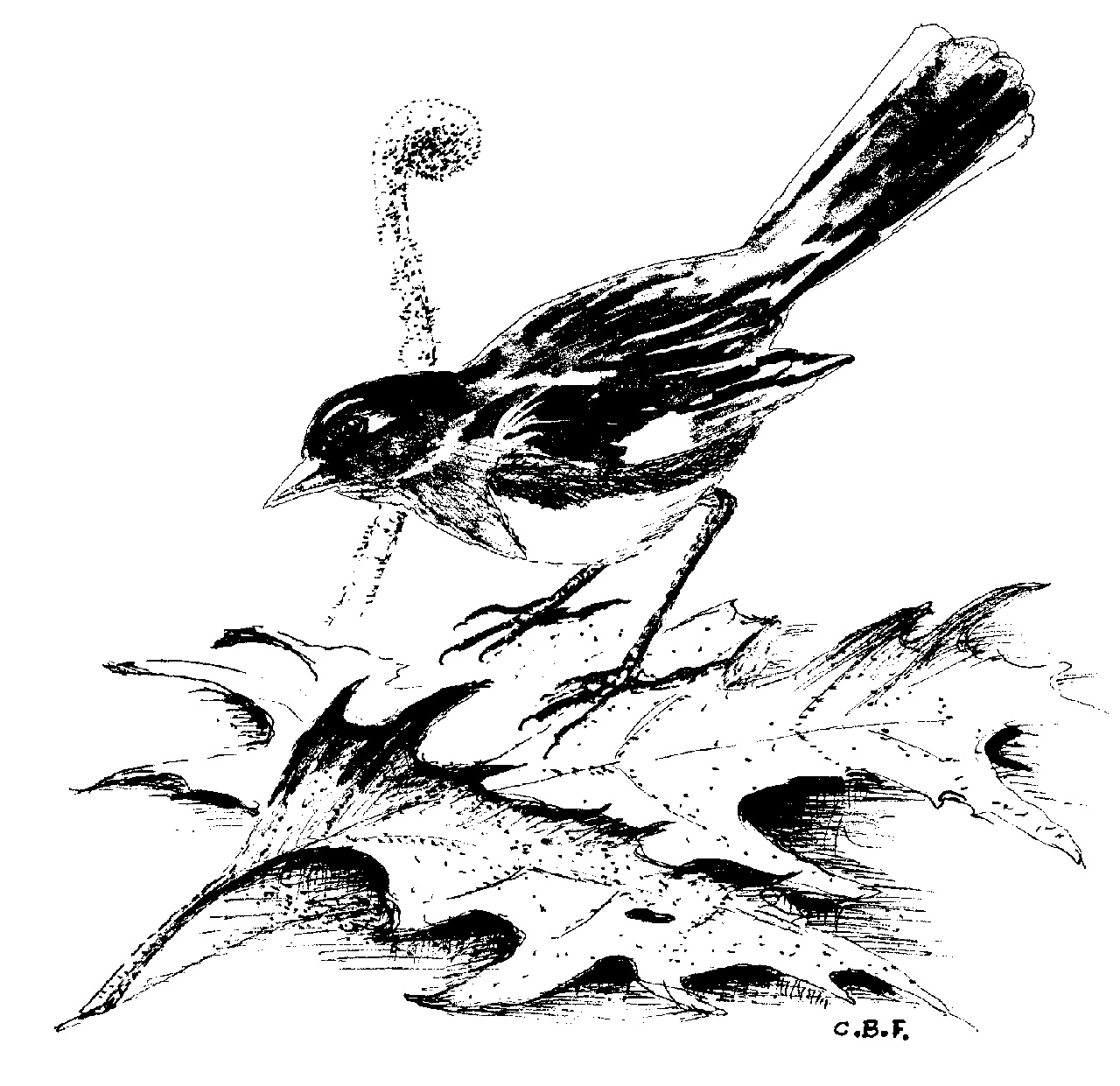
Eastern Towhee