Why Count Ospreys?
by Jack Schneider, Land Trust Manager
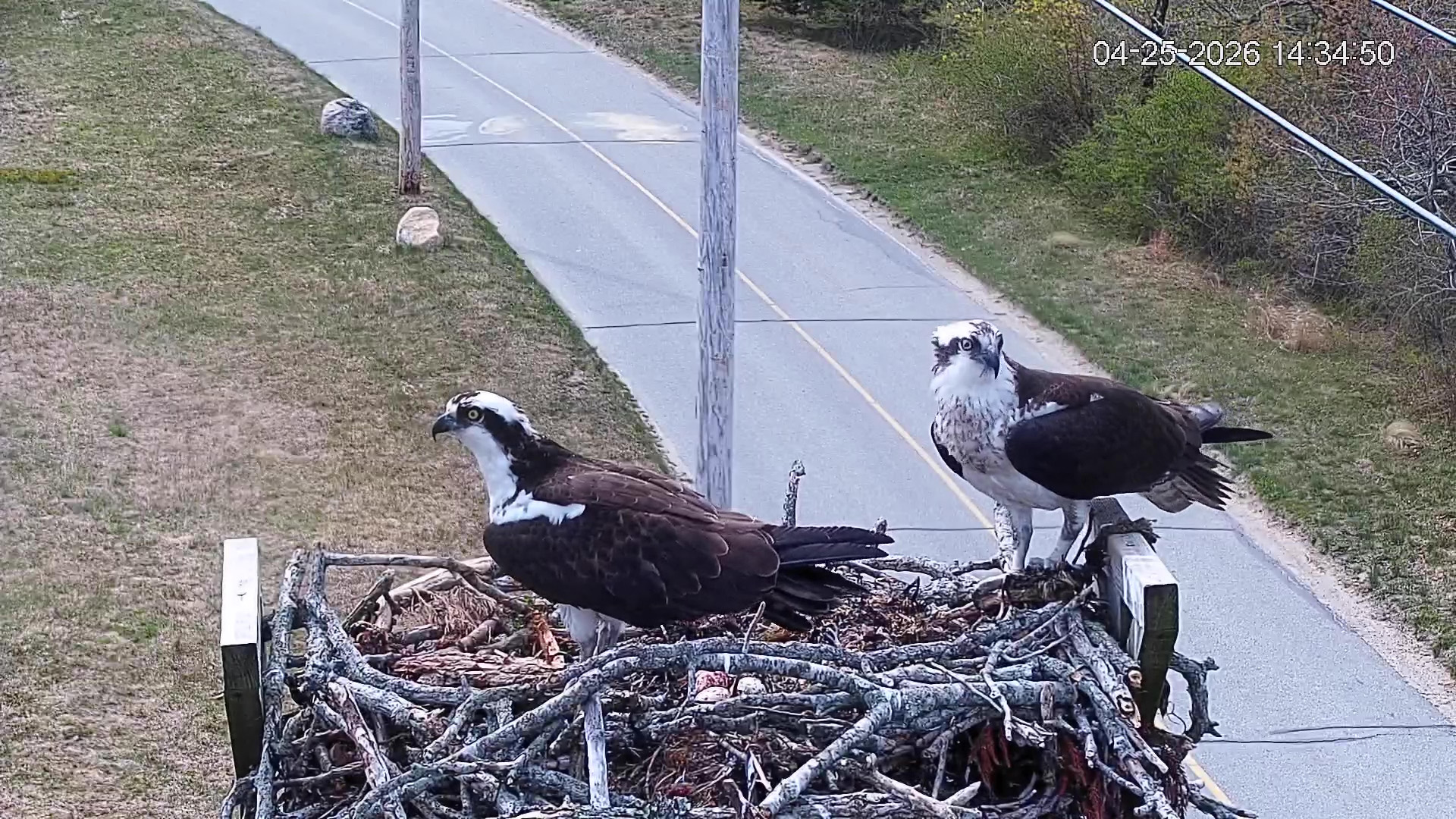
Already three eggs in Osprey Cam nest by April 25, 2026.
Ospreys are central to the Museum’s identity. The species was chosen as the Museum’s iconic logo and is the star of two of the Museum’s important wildlife observation programs: (1) the Osprey nest monitoring camera at Middle Farms and (2) the annual Island-wide nest survey.
Annual nesting reports in the Museum’s records date to 2005. Assisted by other Islanders, Ken Edwards has been the consistent and reliable organizer of this effort. Currently, there are 37 nest sites on the Island, 22 of which are active as of May 1, 2026. This census is no small undertaking. These records provide a snapshot in time based on one observation period each year during June or July.
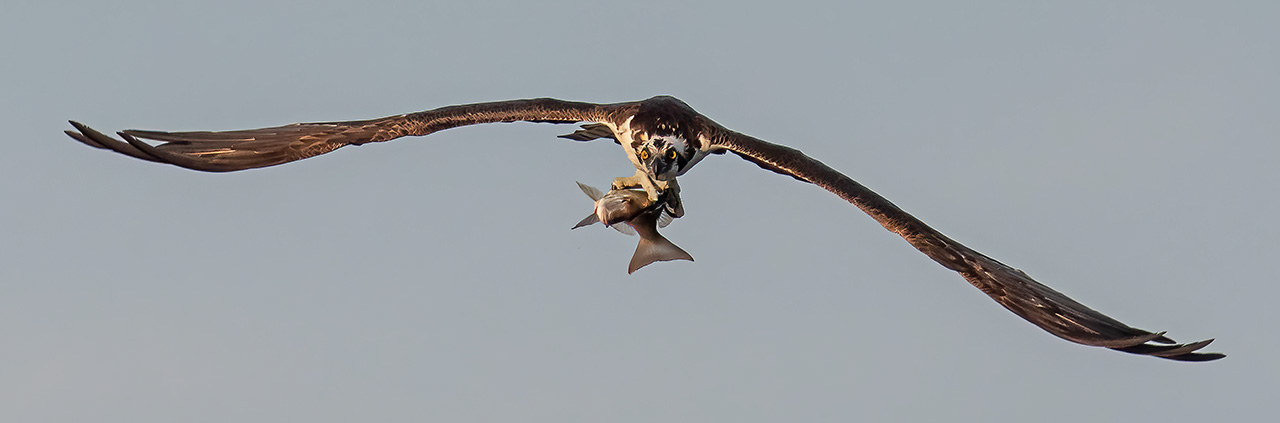
Osprey with fish. Photo by Todd McCormack
Ospreys in the Northeast are migratory. The timing of their journeys coincides with the availability of their primary food: an abundance of smallish forage fish swimming within a bird’s diving depth. A recent collapse of the Osprey population in the Chesapeake Bay region, likely due to commercial overfishing of the forage fish menhaden, is a cause for alarm. The Bay hosts the largest concentration of nesting Ospreys in the world, some 10,000 to 12,000 pairs.
A William & Mary study (2024-2025) revealed that Osprey reproduction in Chesapeake Bay was below DDT levels of the 1960s: “large numbers of Osprey pairs weren’t laying eggs; many of those that did couldn’t keep chicks alive to fledge. Adult Osprey, it seemed, couldn’t find enough fish to create the next generation of birds…”
Fishers Island’s Osprey fledgling success increased from 2015, peaked in 2020, and has slowed or reversed during the past five years despite added nesting platforms. Our Ospreys could be vulnerable to declines similar to the Chesapeake Bay.
Osprey nesting success is affected by many factors such as weather, predation, human disturbance, and food supply. Counting fledglings just once, just for the few minutes required for counting, can overlook other factors that won’t be recognized by the single observation. Instituting a census based on more frequent observations during the nesting season, along with a more formal reporting procedure, could help conservation biologists better understand Osprey population dynamics and factors affecting nesting successes and failures.
Recognizing the conservation need for more detailed information, Ken is leading the effort to expand the census in both scale and detail; and include more interested Islanders. Please join the Osprey conservation effort by contacting Ken directly or the HLFM Land Trust staff.