STATION XI
Betty Matthiessen Wildlife Sanctuary
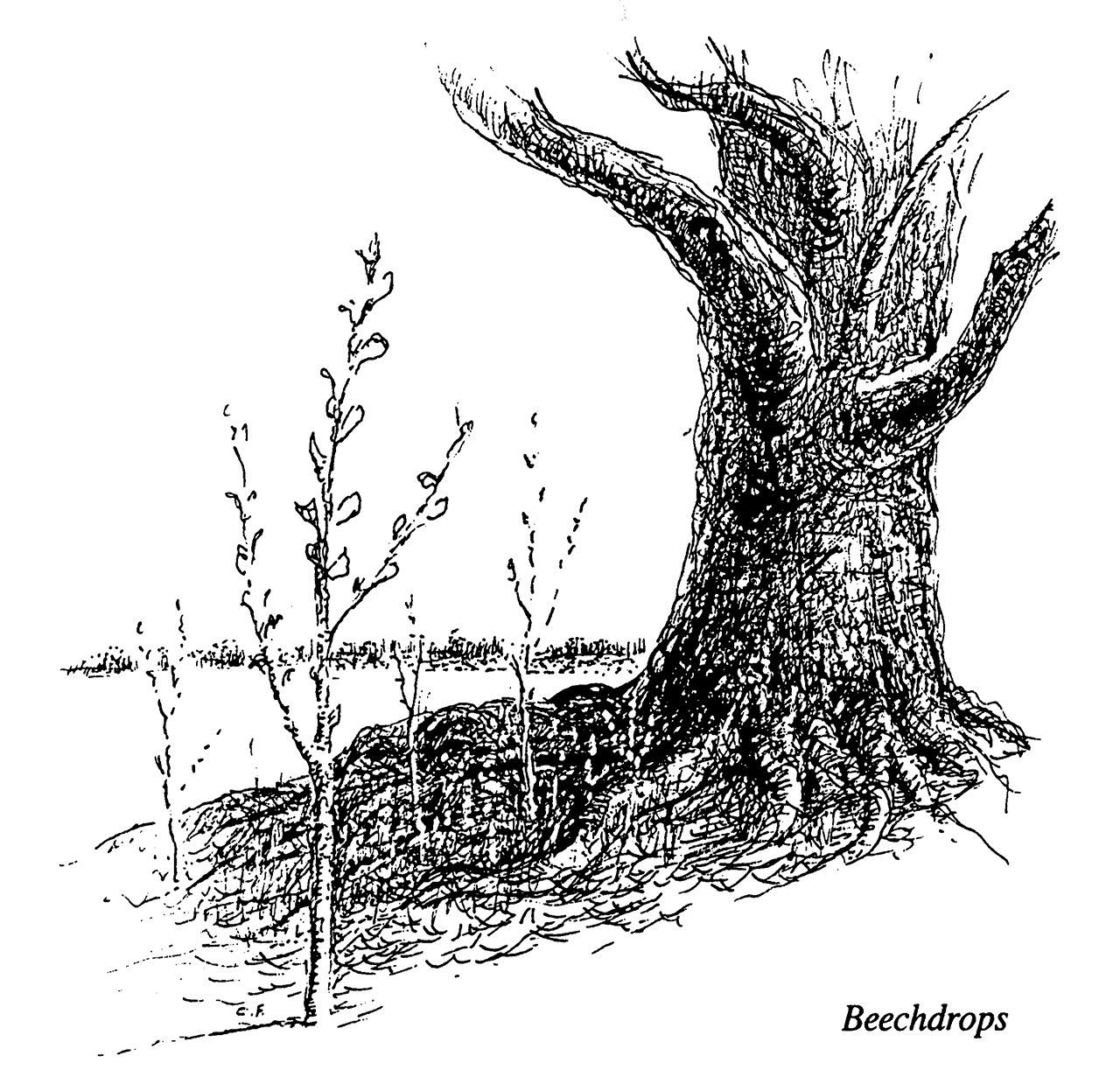
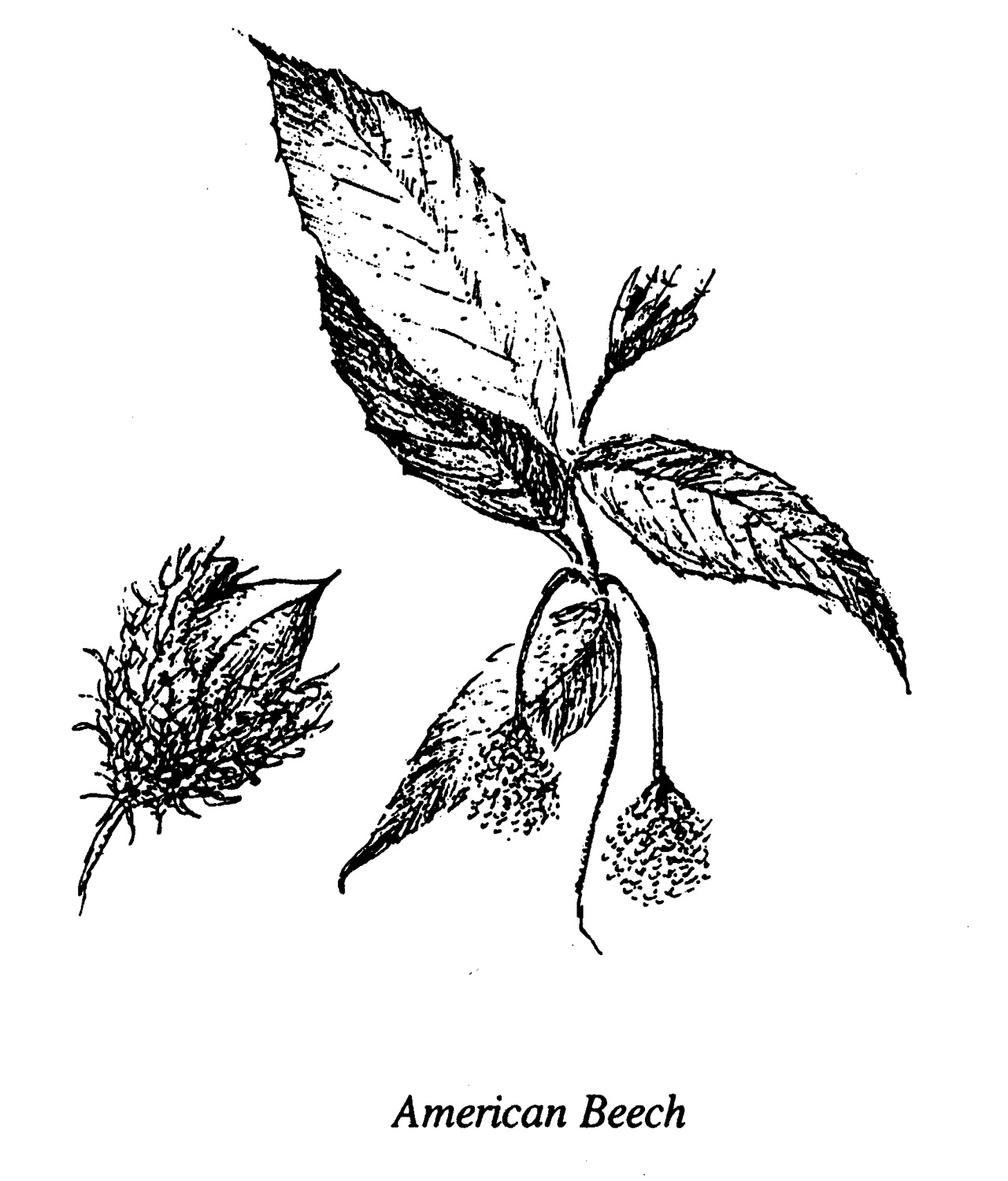
To the right of the trail is a grove of American beech, a tree easily recognized by its smooth gray bark, shallow spreading roots, and long, sharply pointed buds. Dull green, oval, toothed leaves turn yellow in autumn and may persist on the branches all winter long, especially in young trees. The rough fruit, or beechnut, contains a meaty triangular seed, an important food source for birds and mammals.
It is interesting to note that, in this geographic area, the seed appears incapable of germinating. Young beech trees are not seedlings, but root sprouts or clones of a single original “mother” tree.
A striking feature of beech trees is the almost complete absence of other vascular plants underneath the shady canopy. Prevailing low light conditions and a shallow root system discourage the growth of other species. One plant associated with beech is beechdrop, a purplish-colored flowering plant that lacks chlorophyll and obtains nutrients from the roots of American beech. It is pollinated by bumblebees.
Sadly, beech is declining region-wide due to leaf and bark diseases. Of particular concern is beech leaf disease (BLD), caused by nematodes that invade beech leaves, inhibit leaf and bud production, and ultimately kill the trees. The Henry L. Ferguson Museum Land Trust is working with the New York Department of Environmental Conservation to treat the trees in this grove and at other locations across the Island, but this disease was only discovered in recent years – much remains unknown, and it is unclear if these treatments will be enough to save the beech trees.
Continue on this trail to complete the loop. Other connecting trails in the sanctuary offer different views and examples of the Island’s flora and fauna.