Land Trust Report
by Bob Miller, Vice-President Land Trust
I am happy to report that our purchase of sixteen additional acres of environmentally sensitive land from FIDCO is on track. A revised Memorandum of Understanding was signed on February 26, 2026, and surveyors and counsel are now working to procure Town approval of a lot line change to formalize the transaction. We had a tremendous response to our request for donations to effect this acquisition and hope to close this summer.
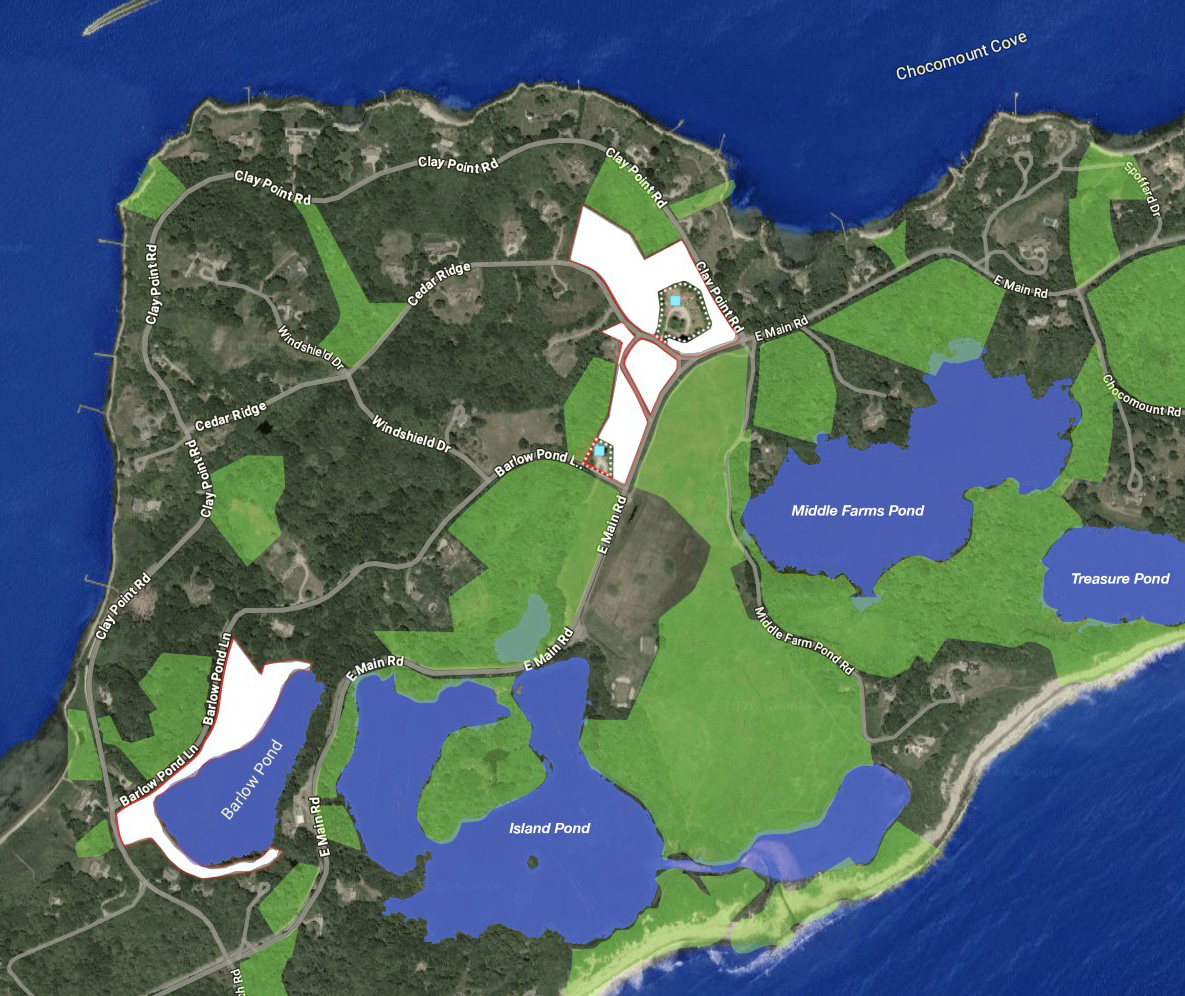
New Land Trust pending purchases from FIDCO are marked in white.
Nearby Land Trust properties are lightly shaded.
A key purpose of the Land Trust is, of course, to preserve and protect habitat for diverse flora and fauna. In 2024, nesting activity by a pair of Bald Eagles was observed on relatively inaccessible Land Trust property located in the middle section of the Island, but no eggs or chicks were observed in the spring of 2025. The nest was expanded later last year, and visits by the pair of birds became more frequent last fall and winter. I am thrilled to report that one eaglet was photographed in the nest by Board member Todd McCormack on April 11. He also observed an adult eagle bending over to feed a second eaglet that was not visible. We are not aware of any historical record of breeding eagles on the Island. (See “More on Bald Eagles on Fishers Island” article for additional cautionary information on interaction with this nest.)
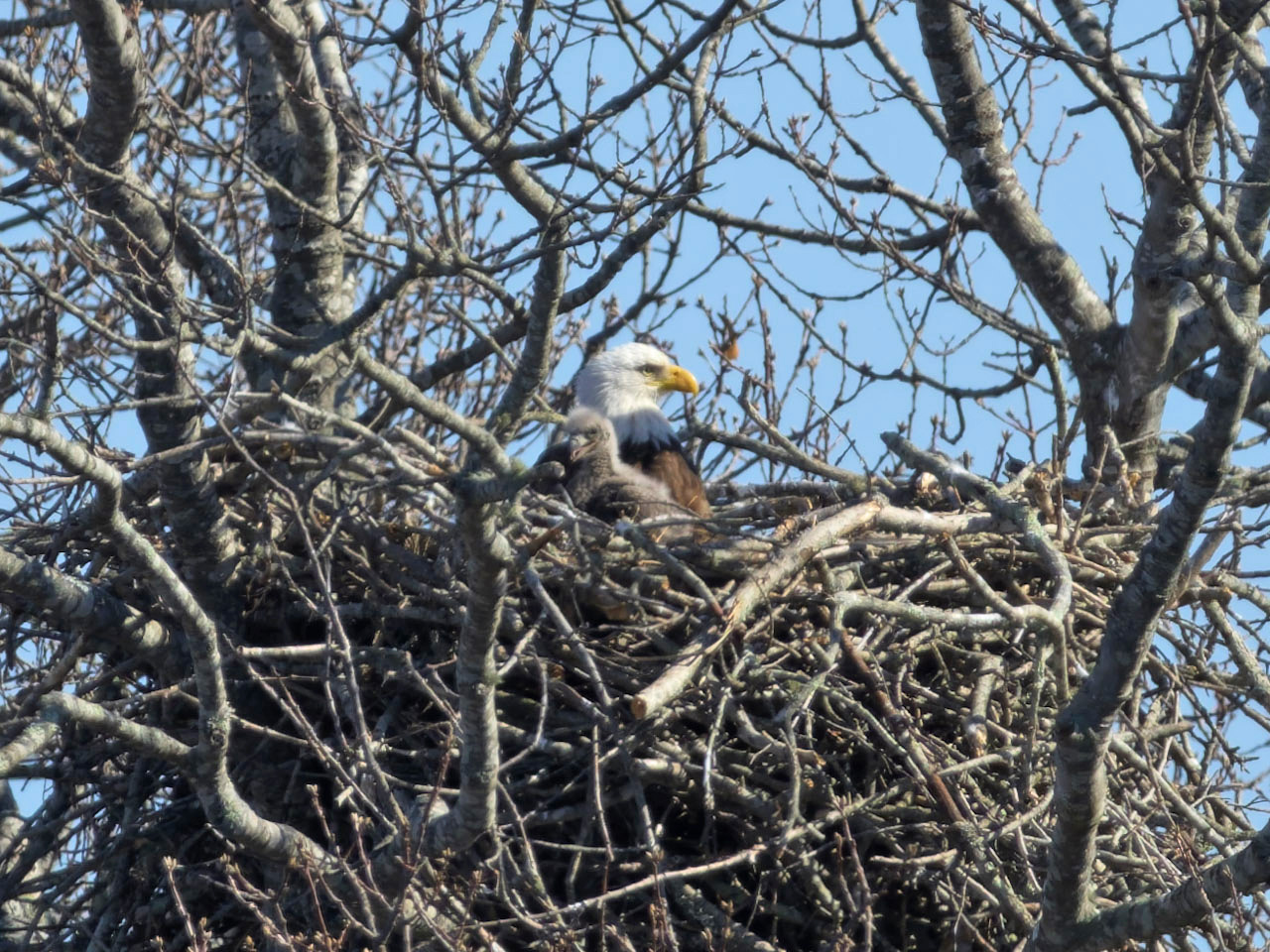
Detail view of eagle and eaglet on nest, April 11, 2026.
Photo by Todd McCormack
The first Osprey to arrive this year was spotted on March 19 by JR Edwards, and a female Osprey first landed on the Osprey Cam nest on March 27, joined by a male on March 30. Ospreys apparently detest eagles, and fierce dogfights can be anticipated as the eagles traverse Osprey nesting areas. (See 2024 Nature Notes: Ospreys and Eagles.)
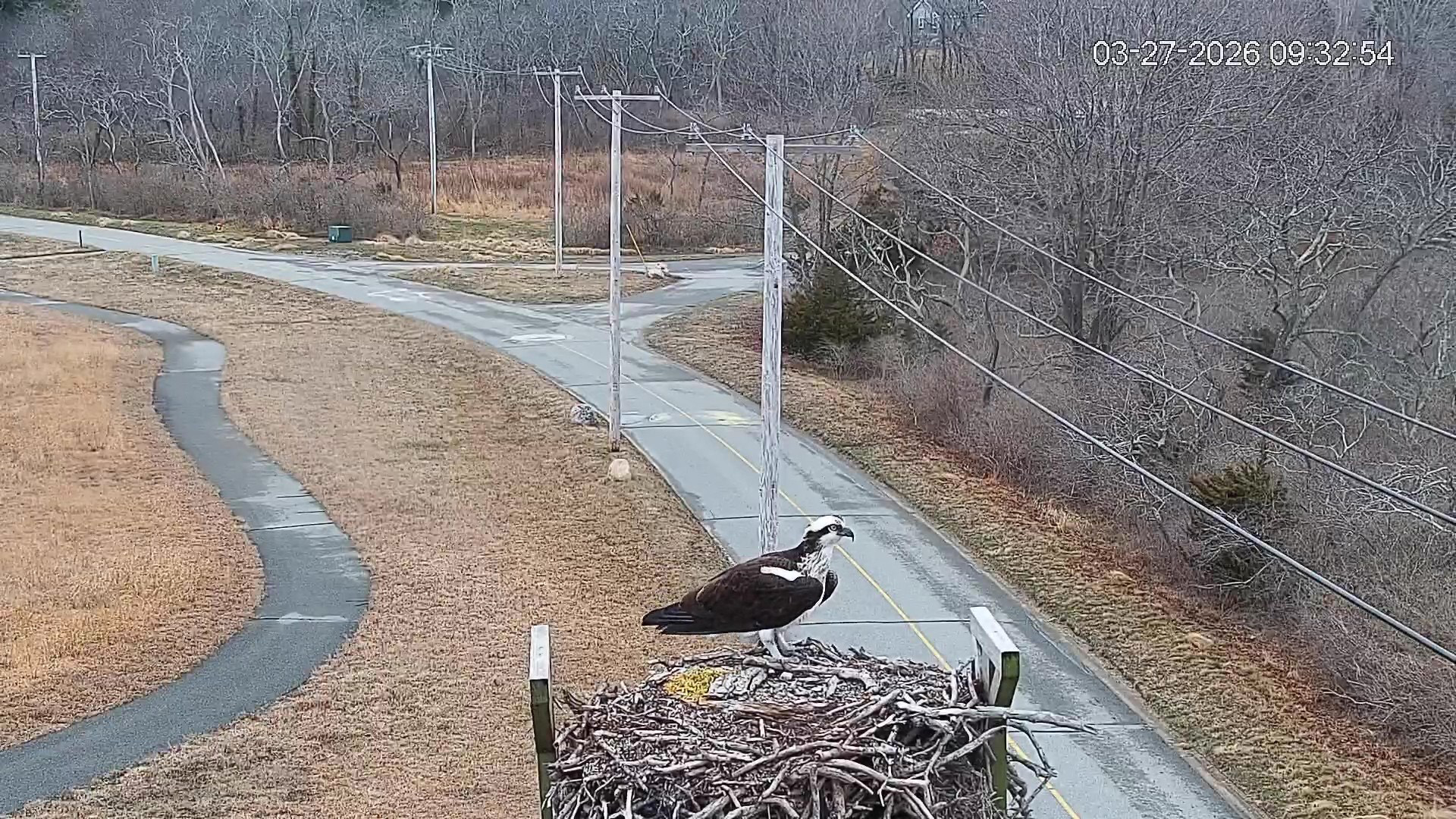
A female was the first to arrive on Osprey Cam nest, March 27, 2026.
The nesting eagles bring to mind the appearance of other species that were uncommon or unknown here until recent years. Black sea bass (biologically a small grouper) are now plentiful but were considered non-resident and accidental in local waters prior to approximately 2010. On Gardiners Island and on Block Island, gray seals – up to ten feet long – can be seen by the score; these animals were unusual strays from arctic waters prior to 2000. Frequent sightings and catches of sandbar sharks (aka brown sharks) and other species of large sharks in local waters are unprecedented.
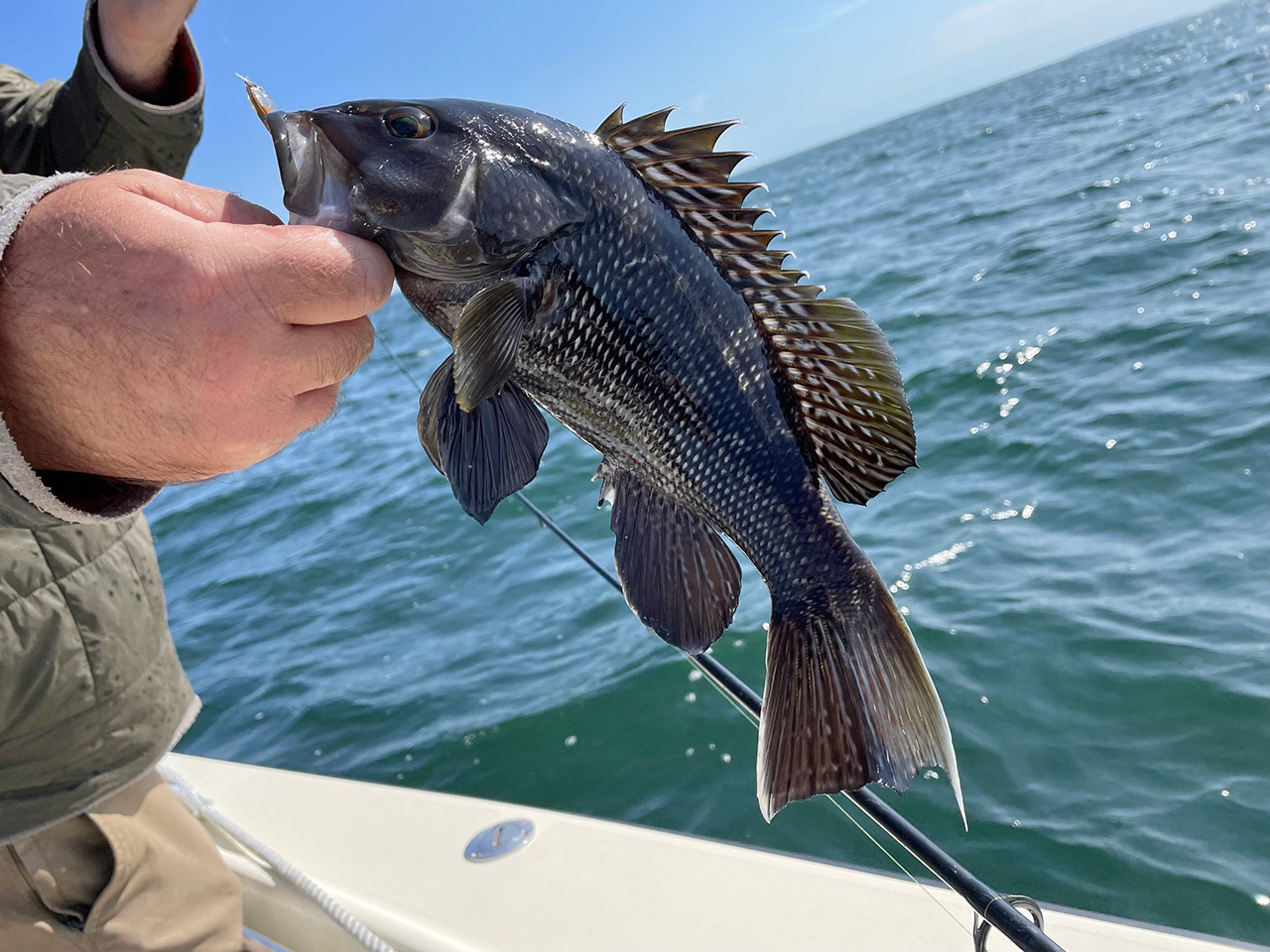
Black sea bass (Centropristis striata): a more frequent catch. Photo by Jim Arrugoni
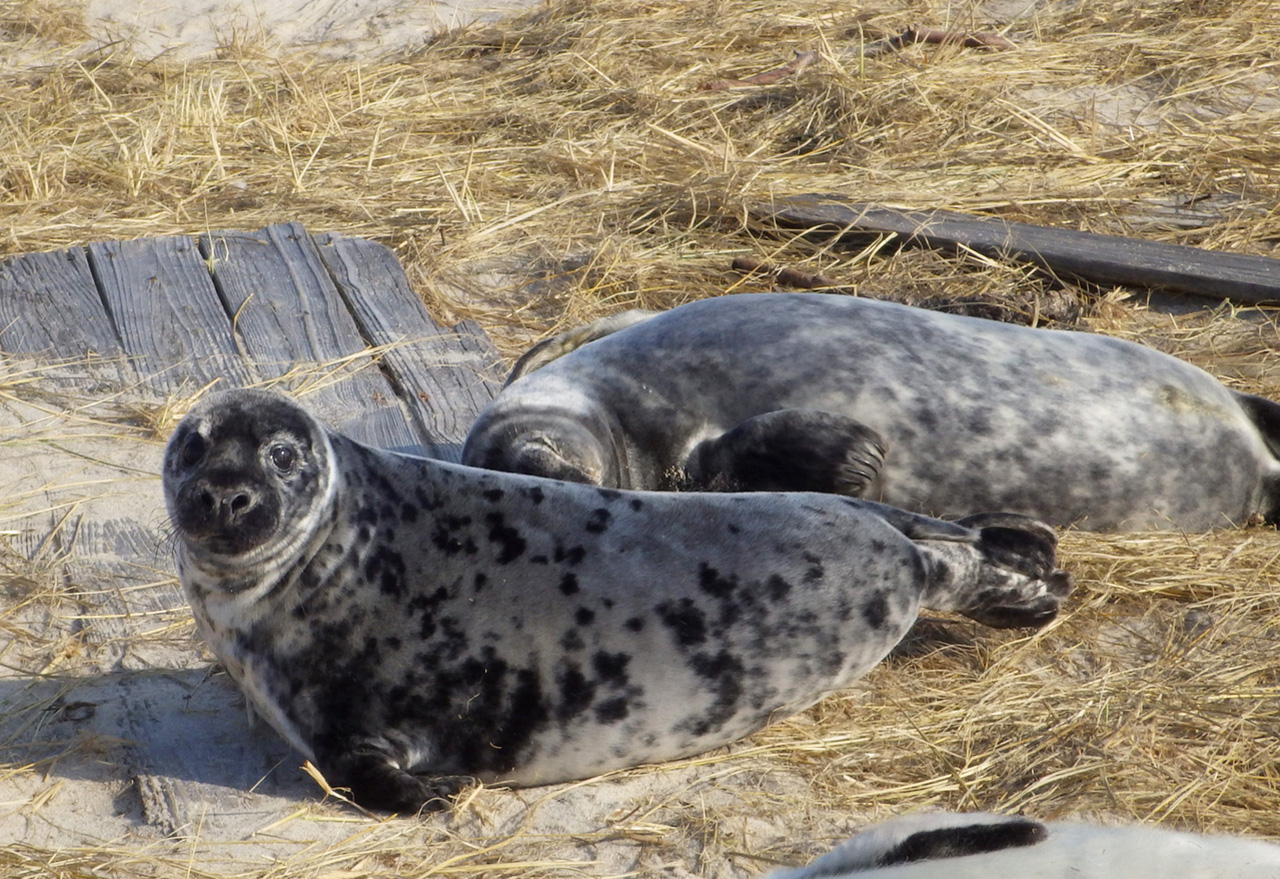
Gray Seals (Halichoerus grypus) are increasingly common in our area. Photo by NOAA Fisheries
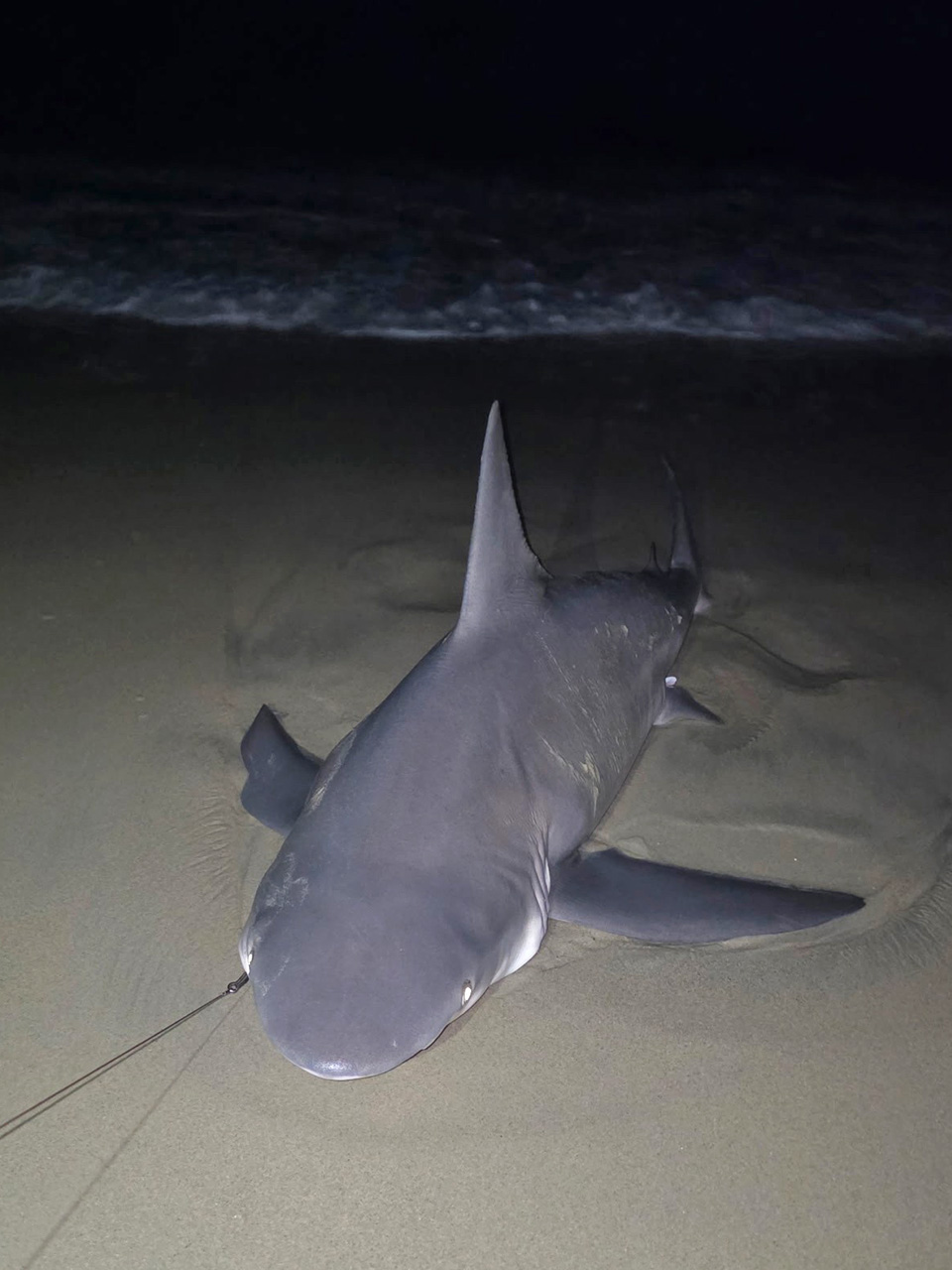
Sandbar shark (Carcharhinus plumbeus) at Club Beach, August 2, 2025. Photo by J R Edwards
Other species are now appearing here in unusual abundance. Striped bass fishing has been excellent for the last few seasons. Not far to our south, humpback whales are plentiful in summer months and catches of bluefin tuna are again possible. By contrast, years ago hundreds of American Kestrels and Sharp-shinned Hawks could be observed streaming past the mound at Race Point on a northwest wind in October; these smaller hawks are now quite rare. Eider ducks, considered rare prior to 1970, are now common around our coves and beaches. Anecdotally, we now see many fewer monarch butterflies, tree swallows, flounder, and bluefish, all of which were almost astoundingly abundant in recent memory.
There is much uncertainty about the causes of these changes in range and/or abundance of disparate species. What we can know is that our protected lands and pristine waters and seagrass beds will provide opportunities for flora and fauna to feed and breed for generations to come. Thanks to all of you who have supported our various efforts.