Healthy Landscape Ecosystems
July 27, 2025 @ 4:00 pm - 5:00 pm
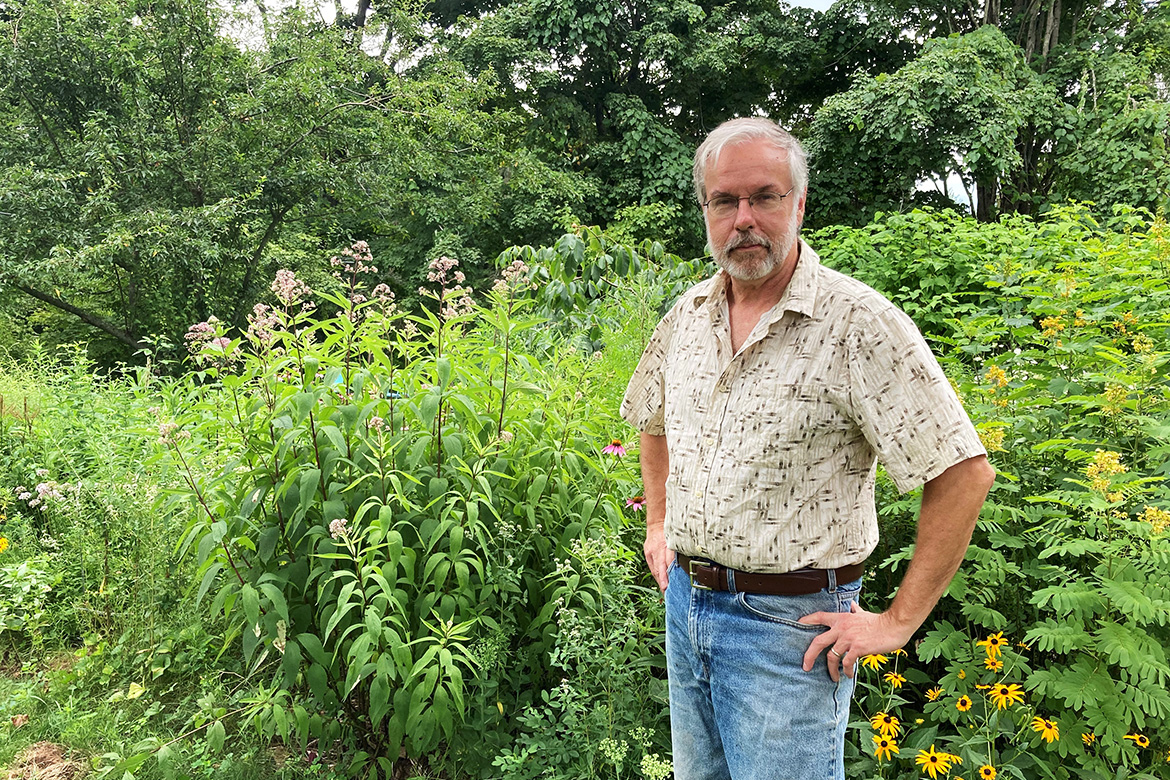
Join us for an illustrated talk by Jim Sirch, naturalist and President of the Connecticut Horticultural Society, to learn about relationships in nature, and how a healthy landscape ecosystem functions well for people and wildlife.
WHEN: Sunday, July 27, 2025
TIME: 4 p.m.
PLACE: In person at the Museum and virtual via zoom
Nature, like life, is about relationships. When you observe a tree in your landscape, what do you see? Do you see leaves, limbs and bark? Or, do you see, if only in your mind’s eye, the many species that it supports? – the caterpillars that feed on its leaves, the birds that feed those caterpillars to their young, the woodpeckers that drill into its bark for insects or the mammals that make their nests in its branches.
We need to look closely to understand and appreciate how species interact and depend upon one another. For instance, we’ve all observed bees. But did you know that there are more than 400 bee species in New York State alone? They range from large bumblebees to tiny little native bees, and many specialize on specific plants for survival. The same is true of many other kinds of wildlife, such as butterflies, moths, and birds. Many animals have evolved over millennia to specialize on specific native plants. John Muir wrote: “When we try to pick out anything by itself, we find it hitched to everything else in the Universe.” When we begin to appreciate the interconnectedness of all things in nature, we see that everything is interdependent and affects everything else.
In an age in which humans are rapidly unraveling the ecosystem services of the planet, It’s important to understand how we can make a difference in our own landscapes. It matters what trees you plant, what shrubs you install, or how you site a water feature. All these things contribute to having a healthy landscape ecosystem.
Jim Sirch is a trained Naturalist and President of the Connecticut Horticultural Society. He recently retired from the Yale Peabody Museum. Jim is a UConn Master Gardener and board member of his local land trust and the Mountain Laurel chapter of Wild Ones. As a naturalist, he brings a deep understanding of geology, plants and wildlife and how they interact within a particular ecosystem. Jim is passionate about helping others decrease their lawn and re-wild their yard. He founded the Peabody-Beardsley-Maritime chapter of FrogWatch, a national community science program to identify and track frog populations and co-founded a native plant seed library at his local public library. Jim holds a B.S in Forestry from West Virginia University, a B.S. from Miami University in Science Education; and an M.S. in Environmental Studies Administration from Antioch University. He is honored to be a Sigmund Abeles Award recipient from the Connecticut Science Teachers and Supervisors Association for outstanding science teaching and professional development. Jim also authors a nature blog called Beyond Your Back Door at www.beyondyourbackdoor.com.
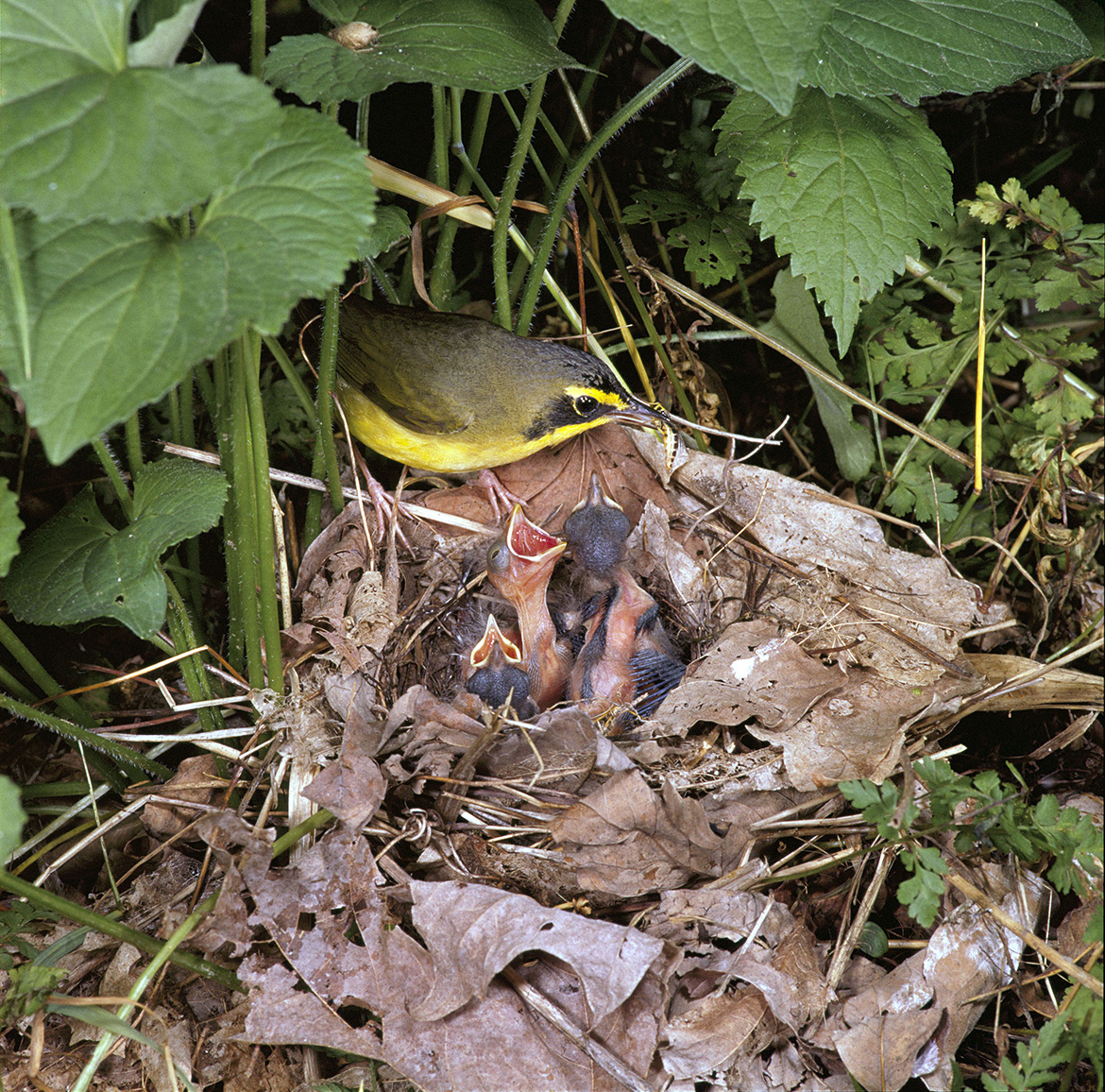
Warbler feeding chicks. Photo by Steve Maslowski USFWS
Join Zoom from PC, Mac, iPad, or Android:
https://us02web.zoom.us/j/89959486559
Phone one-tap:
+16469313860,,89959486559# US
+16465588656,,89959486559# US (New York)
Join via audio:
+1 646 931 3860 US
+1 646 558 8656 US (New York)
+1 305 224 1968 US
+1 309 205 3325 US
+1 312 626 6799 US (Chicago)
+1 301 715 8592 US (Washington DC)
+1 360 209 5623 US
+1 386 347 5053 US
+1 507 473 4847 US
+1 564 217 2000 US
+1 669 444 9171 US
+1 669 900 9128 US (San Jose)
+1 689 278 1000 US
+1 719 359 4580 US
+1 253 205 0468 US
+1 253 215 8782 US (Tacoma)
+1 346 248 7799 US (Houston)
Webinar ID: 899 5948 6559
International numbers available: https://us02web.zoom.us/u/kj713bflu