How to Bury Treasure
A Field Guide to Designing Treasure Hunts
By Mike McNamara, Board Member
Local legend holds that over three hundred years ago, Captain William Kidd came ashore at Fishers Island by night and buried some of his treasure on the Island’s east end. Academics dismiss the story, pointing to a lack of historical evidence. That has not dimmed the excitement of generations of treasure seekers from both on and off the Island. Over the years, several attempts have been made to get to the bottom of Treasure Pond, both literally and figuratively.
Perhaps the legend is kept alive in part because Fishers is the perfect setting for a tale of lost pirate treasure: there are desolate beaches; coves hidden around rocky corners; deep forests stitched with foot trails, tranquil fern glades and mysterious abandoned military bunkers. If that weren’t enough, a formidable lighthouse stands guard at the west of the Island, a stern grey fortress looming above the frothing sea.
The Museum does not have any maps showing the location of Kidd’s hidden riches, as far as you know. And if we did, it would certainly not be hidden beneath a false bottom in the antique iron treasure chest from the late 1600s or early 1700s that sits beneath the “Pirates of Fishers Island” display just inside the Museum’s front doors. And the key to that old English chest is most definitely not hidden in a hollowed out copy of Howard Pyle’s Book of Pirates on the second floor, where long shadows strangely gather on even the brightest summer days. No, sadly, we cannot point you to the map, nor Kidd’s treasure.
But we are able to help you put together your own treasure hunt.
What follows is a short but thorough guide to designing your own pirate adventure, based upon the principles that underpin the Museum’s own annual Fishers Island Treasure Hunt. Now, your treasure hunt doesn’t have to be as sweeping and grand as all that. A hunt can be a small afternoon diversion or a large production. It can unfold over an hour or a week, and it can take place in an apartment, on Dock Beach, or across an entire Island. All that really matters is that you have fun, that you’ve awakened the joy of discovery in your treasure hunters, that you’ve helped keep the dream of finding lost pirate treasure on Fishers Island alive.
Start with the Story
Most treasure hunts follow a simple sequence of clues, progressing from point A to point B to point C. Before jumping into the action, take a moment to build and explain the mythology. A creative backstory gives the hunt structure and personality, and answers two questions the players will have: Why are we doing this? What are we looking for? Use the backstory to establish the internal logic of the game’s world, and use your clues to add more pieces to the story.
Map the Territory
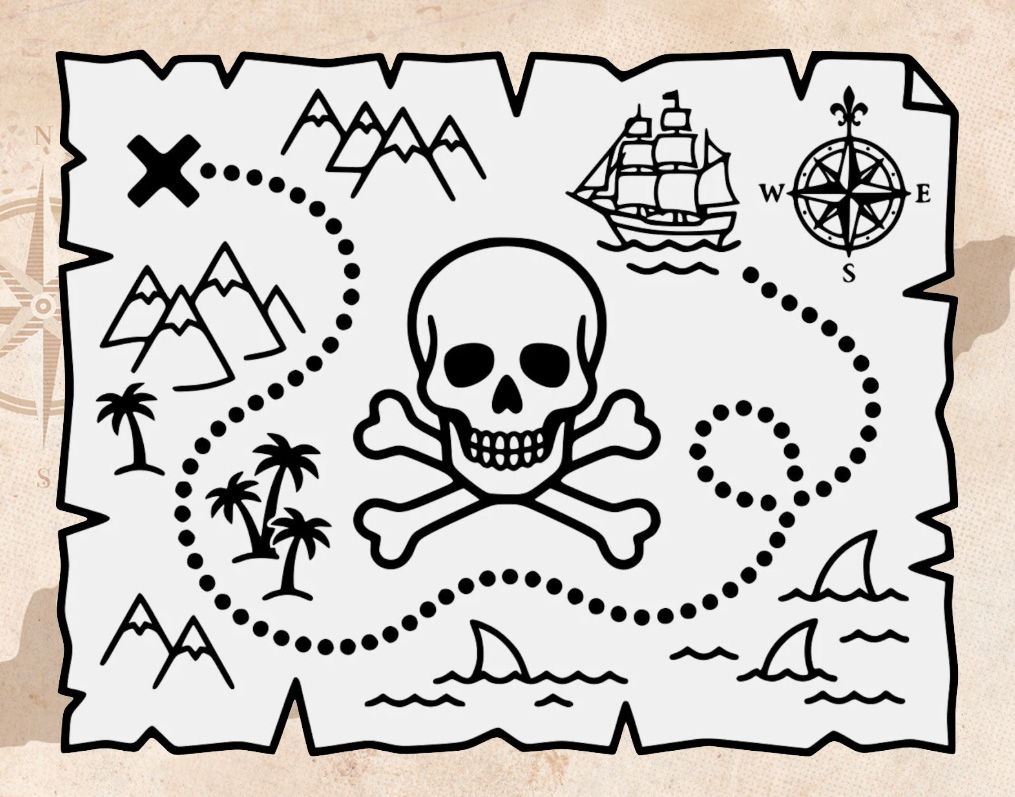
Before writing any clues, map out the playing area. Start at the end – where the final chest will be found – and work backward to your starting area. Ten clues are usually more than enough. Make sure you put some distance between clues—kids on a quest move faster than you expect. After all that work, you don’t want the hunt to end in ten minutes.
Put yourself in the shoes of the most ‘adventurous’ kid in the group – where are the nearest hazards? Unless there is direct supervision, don’t put clues where swimming is necessary, or where airplanes may be landing. And while graveyards and the attics of old churches are atmospherically correct, they are not places you want to have a gaggle of kids sprinting through. Make the clue placements unexpected, but not out of bounds.
The Art of the Clue
Writing good clues is often the hardest part of designing a treasure hunt. Consider the age and reading level of your players – not everyone is a miniature Alan Turing. It is tempting to drench your clues in colorful pirate speak using centuries-old jargon and yellowed literary flourishes. Be careful not to let the style drown the substance. Figure out the riddle first, and then add a waft of seaweed and cannon smoke afterward.
For the Museum’s hunt, we use rhyming riddles that mix tidbits of Island history with references to local landmarks. You might also use crosswords, word searches, anagrams, or, depending on your artistic skills, Rebus puzzles where pictures, symbols, and letters are used to represent a phrase or word (e.g., a picture of a marathon winner next to a picture of a boulder for “Race Rock”).
The younger the players, the more direct the clue should be. Be cryptic, but not at the expense of being specific. If you are lucky enough to be working with a partner, bounce the clues off each other. It’ll be frustrating, because you’ll have spent good time working on some of them and your spouse will still just be staring at you blankly. What you might think is clever, someone else might find impenetrable. Give yourself time to get the clues right.
Choose a Narrator
The clues tell a story while selectively revealing information. Conjure the speaker in your head and give them a role in the story. Is the narrator the pirate whose gold they seek, who taunts the players at each turn? Or is the narrator an ally who offers encouragement in the face of great danger? Perhaps the narrator is a ghost, imploring the players to complete the mission so its soul may rest. Spoiler: choose an antagonist and you’ll be surprised how much you’ll enjoy making fun of your players through the clues. The antagonist works so well because children love to prove a sneering villain wrong — and nothing drives a reluctant treasure hunter forward like a clue that ends with ‘if you even dare.’
Don’t Make It Like Homework
There will be a temptation to design the treasure hunt you always wished for yourself—full of Shakespearean riddles and a well-thumbed copy of H.L. Ferguson’s Fishers Island, N.Y., 1614–1925 to solve. This is not what most kids are looking for.
Make the puzzles slightly easier than you think they should be, and mix in some physical challenges. Have the players knock all the cans off of a fence before they can proceed, or jump from deck cushion to beach towel to welcome mat to rescue a stuffed animal without falling into the crocodile-infested lawn. Reward mental and physical leaps of skill.
A Few Good Props
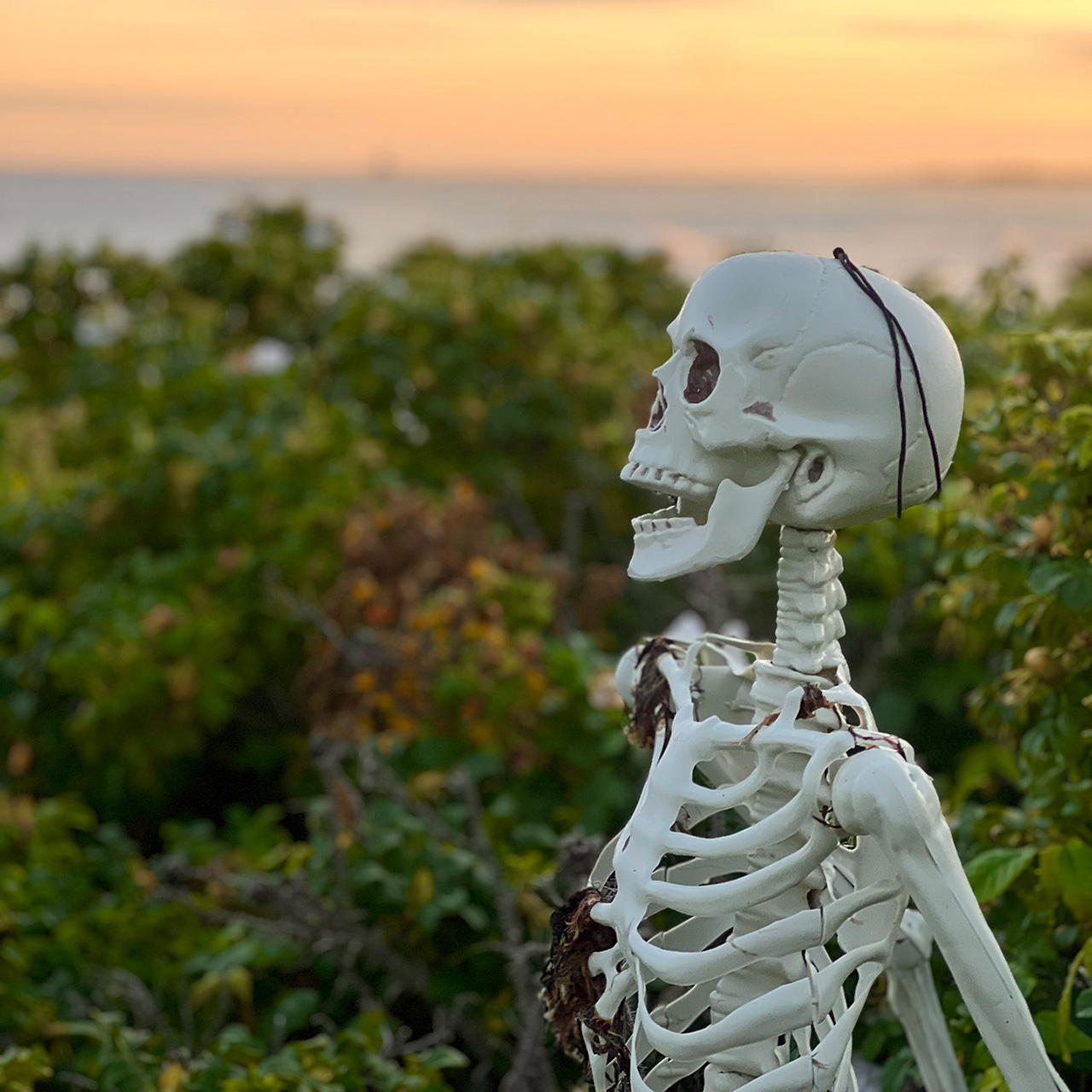
Cheap plastic eye patches and polyester costumes rarely improve the treasure hunt experience. Let the kids make their own costumes out of clothes from the OLOG rummage sale and grandpa’s yacht club pants. If you want to add some special touches, splurge on a few quality props online that can elevate the experience. Life-size skeletons, gold and silver replica doubloons made out of real metal, and small but well-constructed wooden treasure chests are all worth the investment.
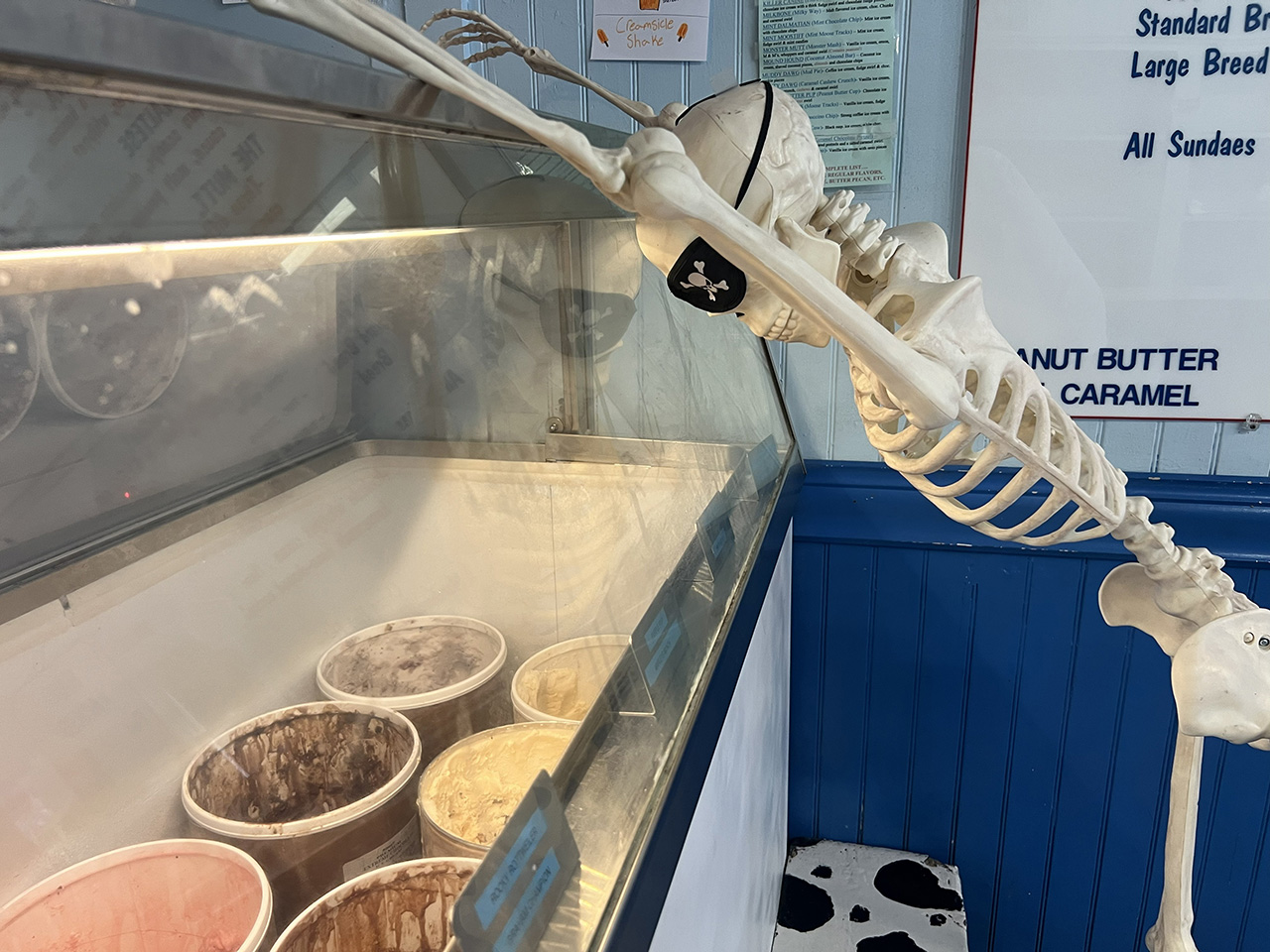
The Second-Best Treasure is Ice Cream
It is not uncommon to feel pressure to blow your players’ socks off with the final treasure. I am happy to tell you that after decades of experience designing and running these games, that the best prize is never money. The best treasure isn’t whatever is in the final chest – it’s the fun of the hunt itself.
I hope this guide helps you run an adventure for your own crew of eager adventurers. They are all welcome to join in the Fishers Island Treasure Hunt. The Museum runs it because we believe the Island’s natural spaces and historical landmarks should be conserved and preserved—but also explored.
For centuries people have searched Fishers Island for Captain Kidd’s buried treasure. Perhaps one day someone will find it. But until then, there is another kind of treasure waiting here—hidden in the woods, among the chirping frogs, around the bend in the trail ahead, in the imagination of any child handed a map and a first clue.
All it takes is someone willing to write it.
There will be two Museum Fishers Island Treasure Hunts this year; each will happen the weekend after the July & August IPP Craft Fair. You can find the latest information and register your team in advance on this website: