The Fading Light of the Firefly
by Terry McNamara, Chair Wildlife Committee
One of the highlights of residing on Fishers Island is interacting with the many creatures that also call the Island home. The appearance of fireflies or “lightning bugs” in late June and early July is one of these experiences that has etched itself into the childhood memories of generations of Fishers Islanders.One of the highlights of residing on Fishers Island is interacting with the many creatures that also call the Island home. The appearance of fireflies or “lightning bugs” in late June and early July is one of these experiences that has etched itself into the childhood memories of generations of Fishers Islanders.
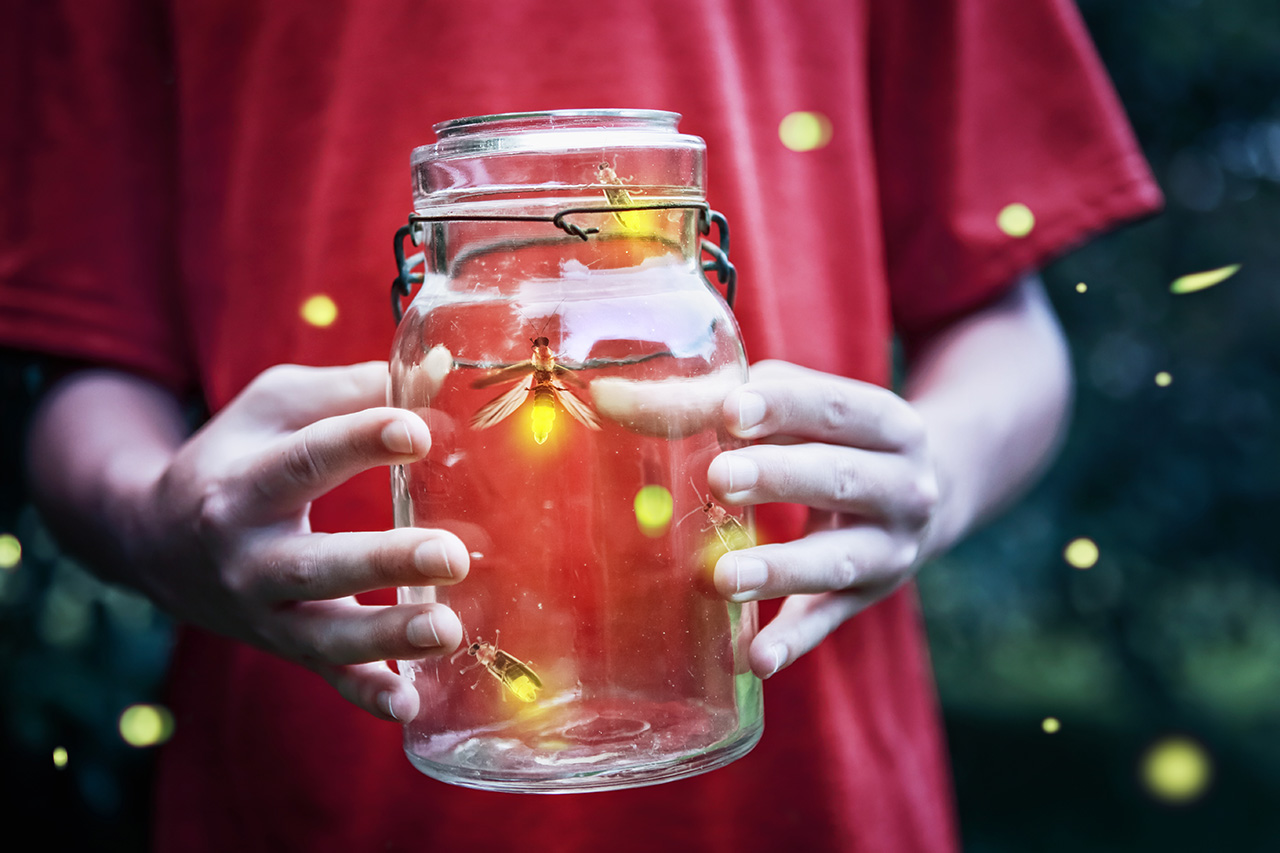
Child holding fireflies in jar.
Observers often describe the fireflies’ luminous mating display as ethereal and magical. These glowing insects don’t elicit the feeling of unease that many people suffer when encountering six-legged creatures. Fireflies don’t sting, bite, or land on you or your dinner. Being solely focused on procreating, they are easy for even small children to approach and capture as they fly about. Behind these magical early evening summer appearances lies a fascinating story of transformation and survival.
Fireflies or “lightning bugs” are neither flies nor bugs. These names are used in New York and New England to describe more than twenty species of beetles (family Lampyridae) that can produce a glow in their abdomens via bioluminescence, a chemical reaction. They use this ability to attract a mate and to warn predators that they are poisonous and foul-tasting.
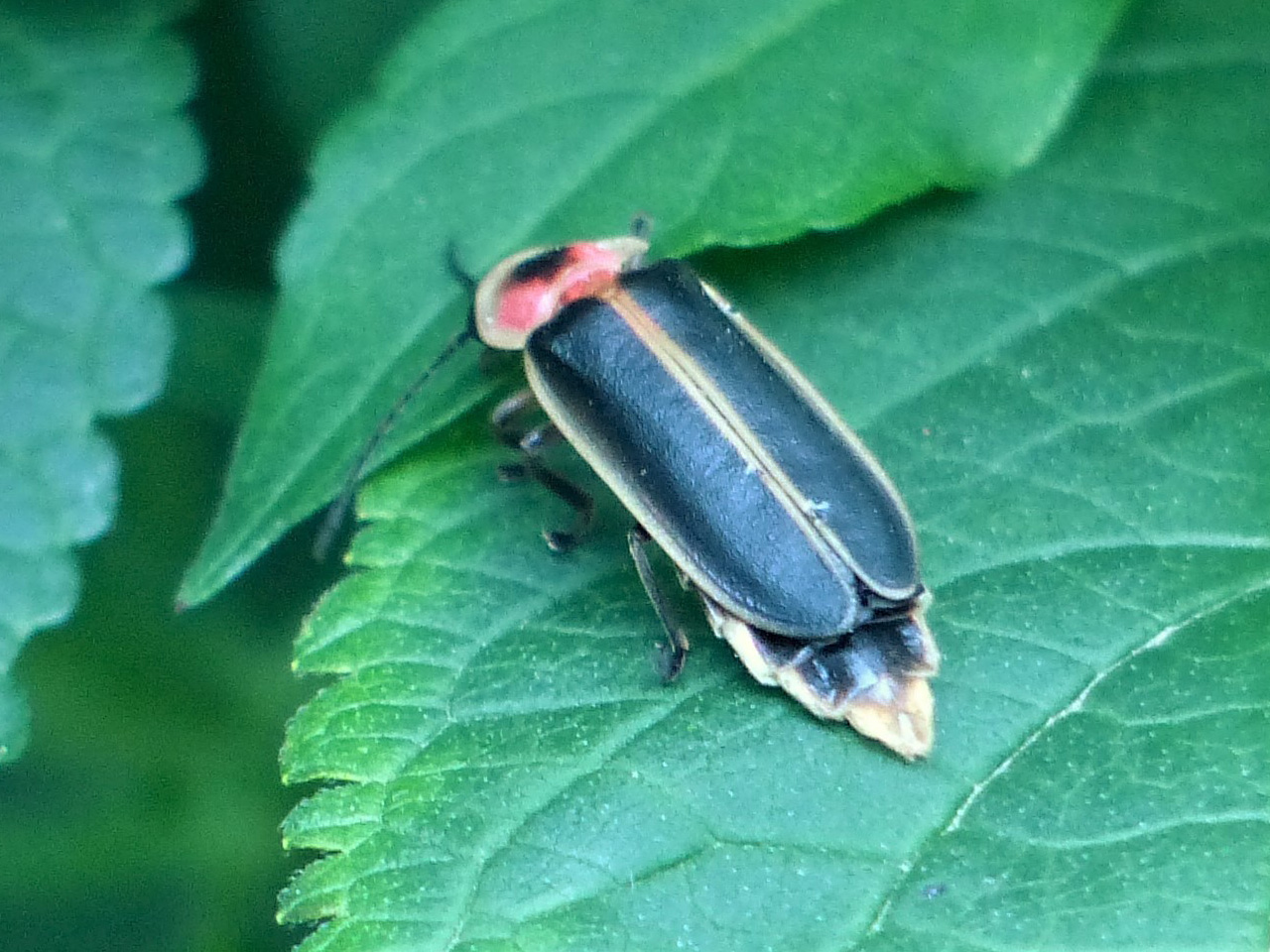
Common Eastern Firefly (Photinus pyralis) on leaf.
During their lifespan, fireflies will undergo complete metamorphosis from egg to larva to pupa to adult, with most of that time spent as larvae underground. Life begins when the female lays eggs in moist areas such as moss or tree roots. The larval form that hatches lives underground or under the leaf litter.
At this stage, the larva produces the characteristic glow of Lampyridae to warn away potential threats. It is a fierce predator that can feed on organisms much larger than itself, including earthworms, slugs, snails, and soft-bodied larvae. They possess mandibles that first inject poison into their prey to immobilize it, and then a chemical mix to dissolve it. This form is solely dedicated to eating and growing larger, like the grandchildren on your couch.
After one to three years, a larva will find a safe place to metamorphose into a pupa for a few weeks before emerging in its adult form. Their adulthood is the shortest of their life stages, lasting only a few weeks. During this time, they do not eat. They are single-mindedly focused on reproducing.
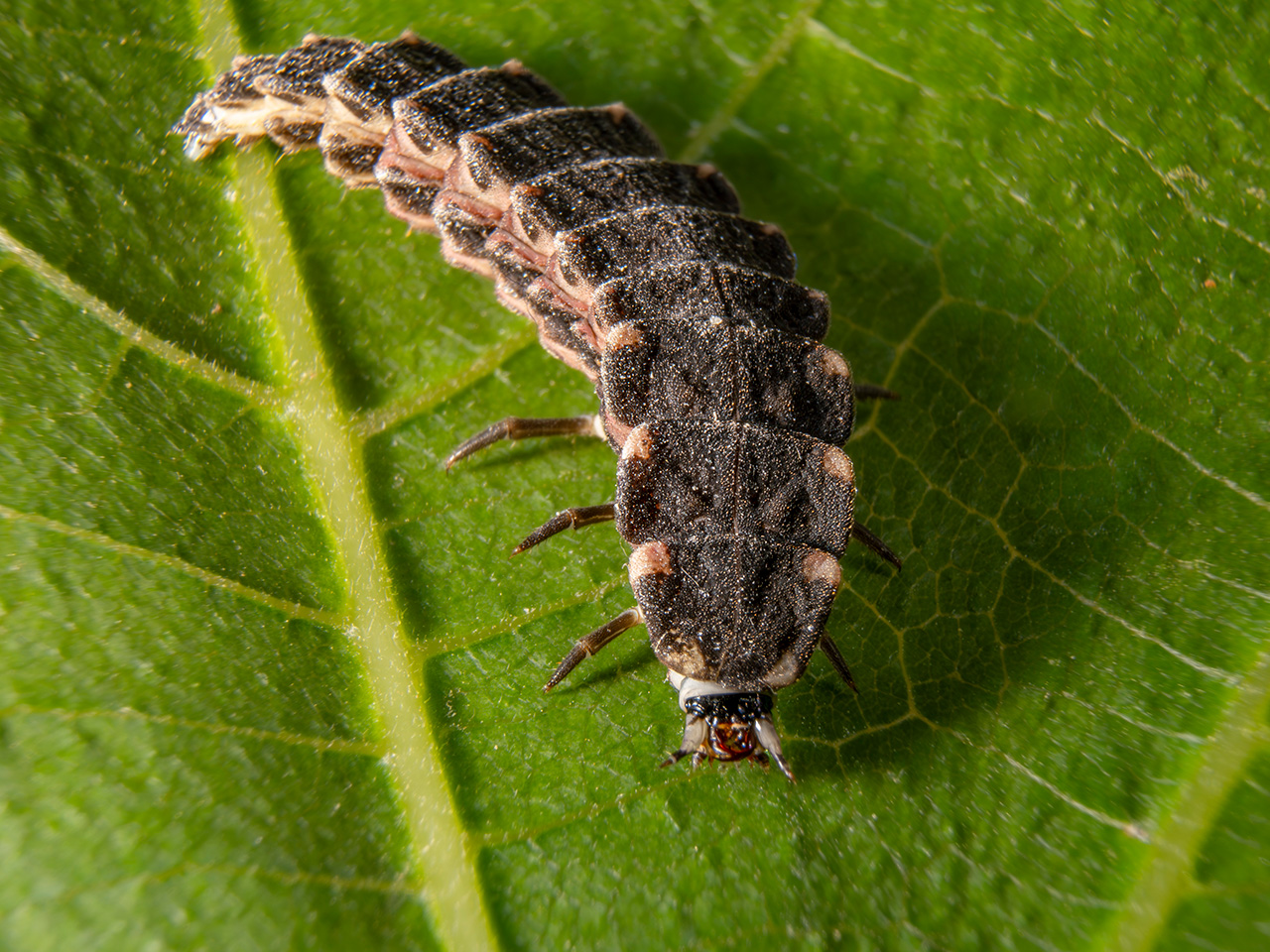
Firefly larva on leaf.
During the summer, males in flight flash to attract the attention of females on the ground. The female has attracted males into her vicinity by releasing potent pheromones. When she encounters a male that she deems worth mating with, she flashes back. Each species has its own flash pattern. The mating takes the entire night with the male injecting sperm and other “nuptial gifts” (a term biologists actually use) containing proteins to enhance egg production and chemicals that increase the female’s ability to produce toxins to dissuade predators.
Some female fireflies of the Photuris genus can mimic the flash patterns of other firefly species, usually photinus, Fishers Island’s most common residents. Having lured and devoured the males of the other species, the “femme fatale” Photuris then moves on to mate with a male of her own species.
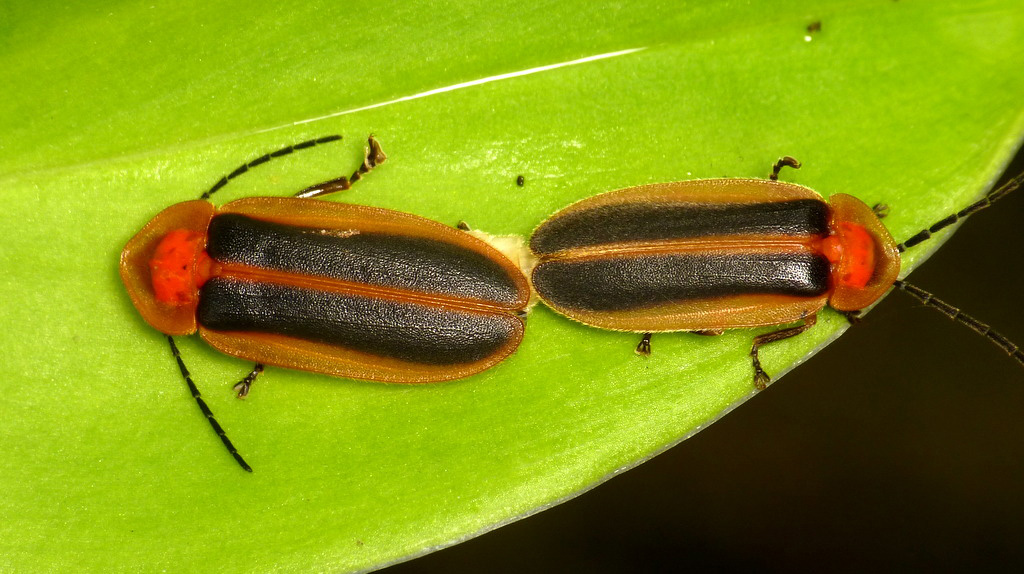
Fireflies mating.
You too can interact with many firefly species. The flash codes of many individual species are available in the book “Silent Sparks: The Wondrous World of Fireflies,” by Sara Lewis, that is available at the Museum store. Her 2024 HLFM talk is available on this website under Programs/Recorded Guest Lectures. Studying the species-specific flash codes and imitating them using a penlight is an entertaining way to identify the firefly species in your area.
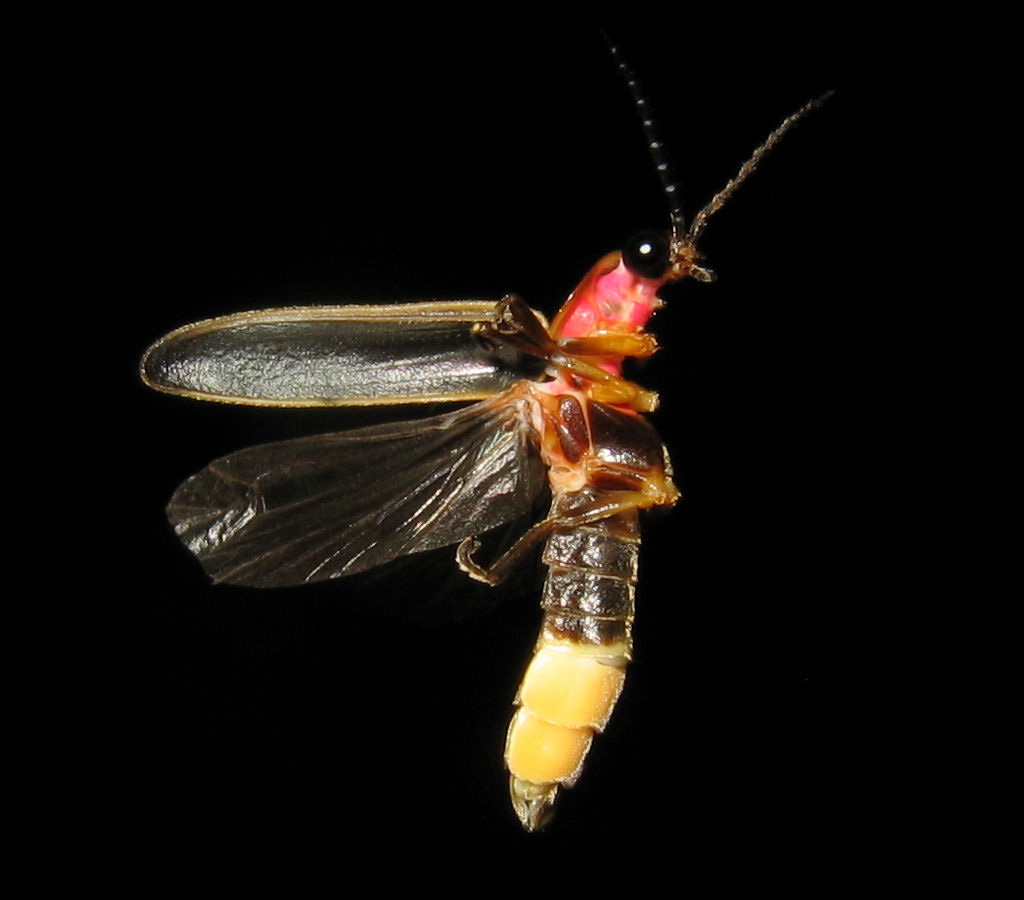
Nighttime close-up of illuminated firefly (Photinus pyralis).
These magical moments are increasingly rare as firefly populations in the Northeast and elsewhere are shrinking. Habitat loss, pesticide use, and high levels of ambient light in the evening hours are the principal culprits.
The Ferguson Museum, through its conservation programs and Land Trust stewardship work, is improving habitat for native insects including the firefly. Fishers Island residents can help by reducing or eliminating the use of pesticides on their lawns. Pesticides kill more than the targeted pest and are a direct threat to our soil-based insect populations. The harm of pesticides has a cascading effect, as these declining insect populations have led to a decrease, if not the complete disappearance of the bird species that feed on them, such as the bluebird and kestrel.
Due to their life cycle and mating behavior, fireflies are non-dispersive, meaning that once they are gone from an area, their return is not likely. Perhaps the most apt metaphor is one using a room full of hundreds of lit candles. When a few are being extinguished hourly, it is not noticeable. By the end of a month, all that remains is darkness.
In our metaphor, it is not yet the end of the month on Fishers. There are still nights where the grandchildren can dance on the front lawn amongst the fireflies, laughing as they catch and cup them in their hands. However, unless we work together to limit the damage being done to these remarkable creatures through responsible pesticide use and habitat restoration, the magic of the firefly may one day only exist in stories.