Education Collaborations Bring HLFM Mission to Students and Students to Nature
by Jessica NeJame, Land Trust Coordinator
I’m crouched beneath the Museum birdfeeder with a handful of 3rd and 4th graders, each of us holding a long stick aloft. We are still and silent, except for the occasional “psh” as we try to summon birds. Suddenly, a Black-capped Chickadee flits down from a tree and grasps onto the top of one student’s stick. Her mouth drops open, but she remains still as the little bird hops over to the feeder, then back to the stick. “Did you see that?” she half whispers, half squeals.
I’ve taught the students all about Black-capped Chickadees—how to identify them based on size, color, behavior, habitat, or song; what sort of food they like to eat; how they survive the winter. But nothing I’ve said could compare to that moment of wonder as these students experience one firsthand.
To encourage more moments like these, the Henry L. Ferguson Museum and the Fishers Island School have expanded our partnership this year. We are creating hands-on learning activities, bringing the students to the Museum and bringing the Museum to the students. Fishers Island School principal Christian Arsenault explains, “The partnership between the Henry L. Ferguson Museum and Fishers Island School represents the very best of our Island. It is an ongoing and ever-evolving opportunity for education, history and community to come together in a meaningful way. It gives our students the ability to connect directly with the Island’s natural environment, bringing their learning to life while strengthening pride in our community.”
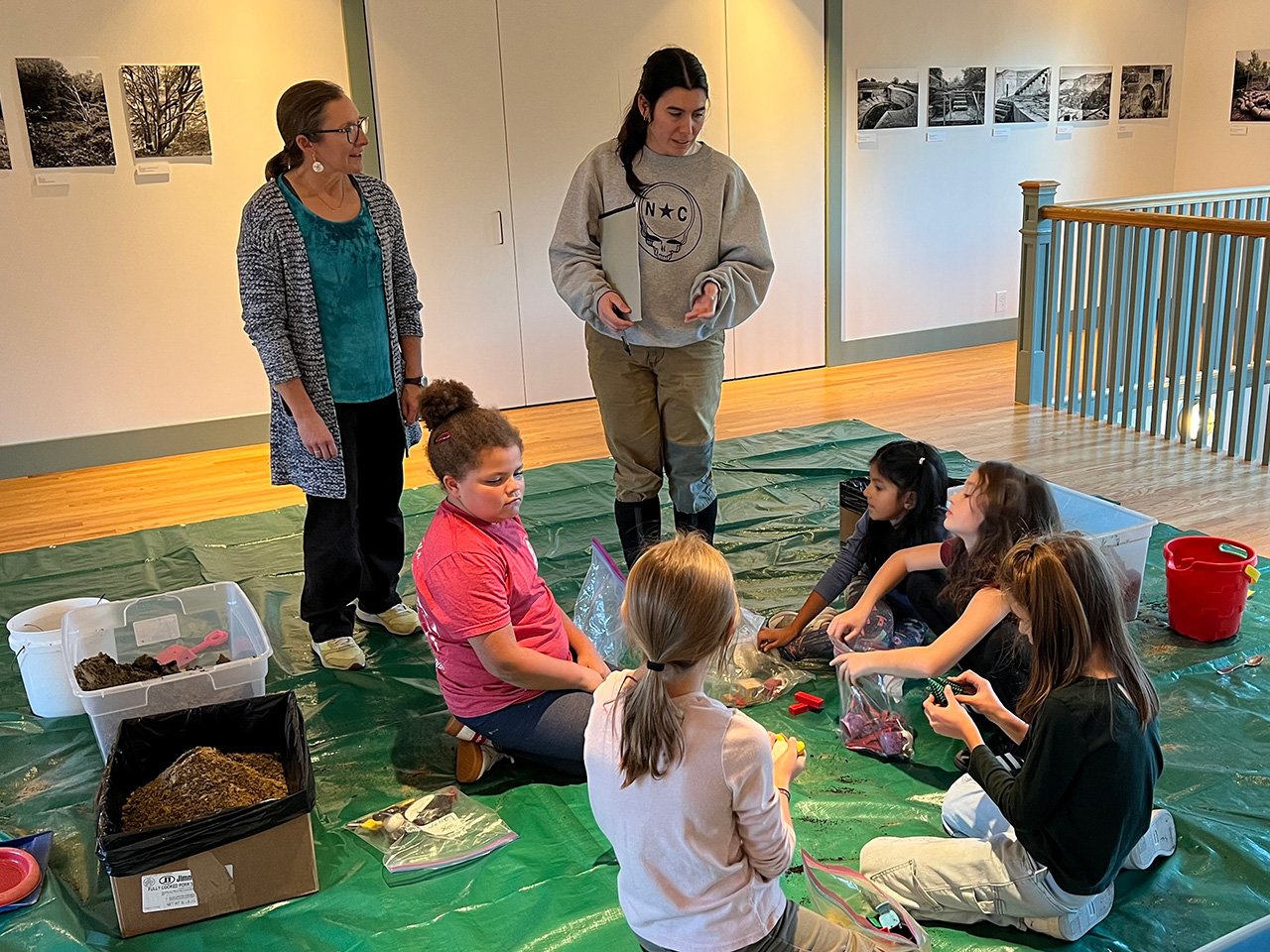
Archaeology class for F.I. School students at HLFM, November 19, 2025. Photo by Marnie Briggs
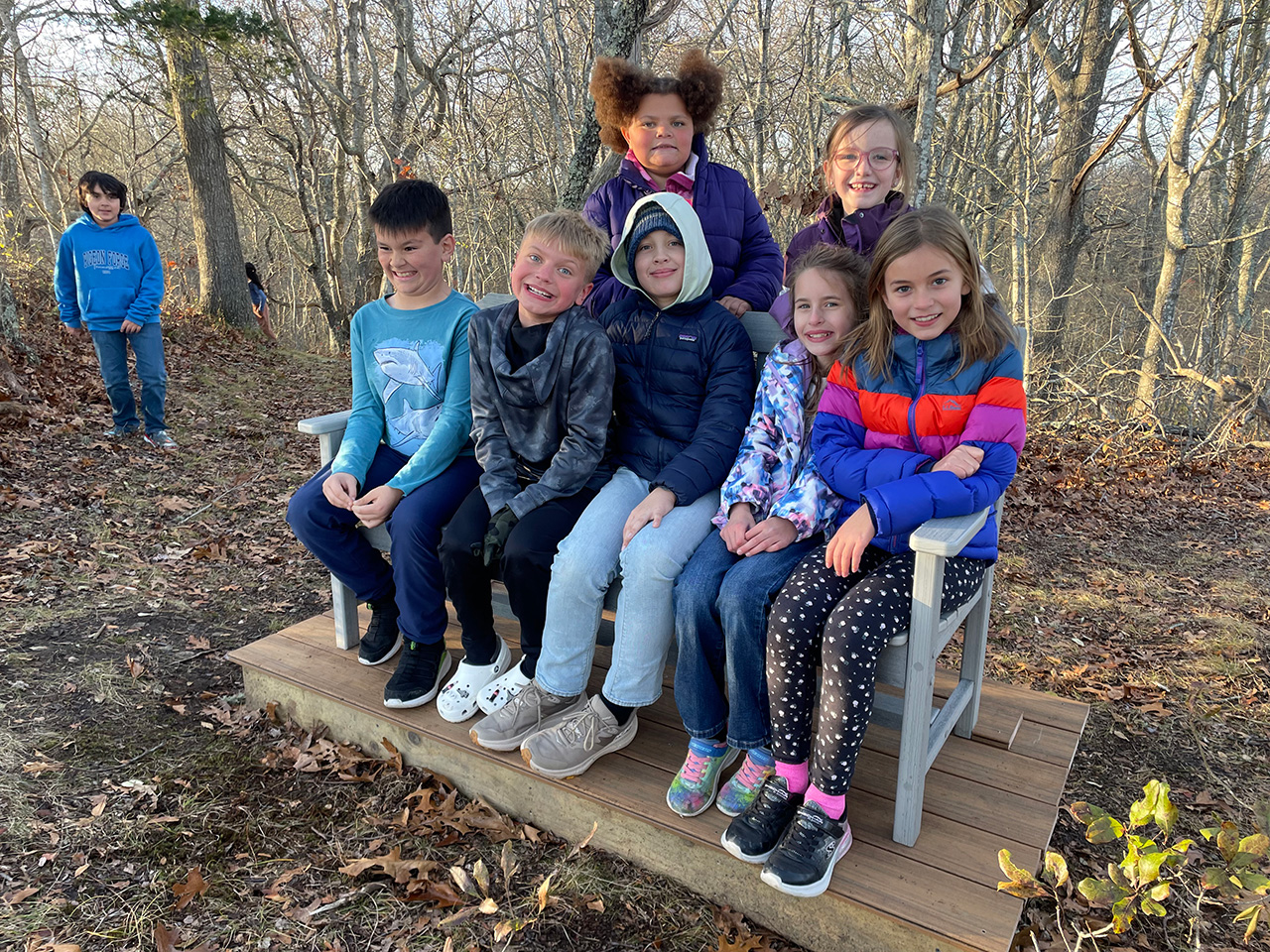
Grade school students taking a break on nature walk, December 3, 2025. Photo by Jessica NeJame
Our recent series of collaborations first began back in 2020, with Land Trust Manager Jack Schneider and Fishers Island School teacher Adam Murray. Murray teaches courses in environmental science, construction and woodshop, and land conservation. It was a natural fit to identify stewardship projects that aligned with the skills he was already teaching. “The partnership Jack and I created has provided so many opportunities for our students. It expanded my classroom far beyond the four walls that surround my tiny room. Students have not only been able to see and experience the vast beauty that makes Fishers Island so special, but they have also been able to actively help in its preservation,” says Murray. Over the years his students have constructed signs, benches, and overlooks; cleared invasive plants and cultivated native plants; and assisted New York Natural Heritage Program scientists by cutting coverboards and deploying pitfall traps. Their hard work has been instrumental to the Land Trust.
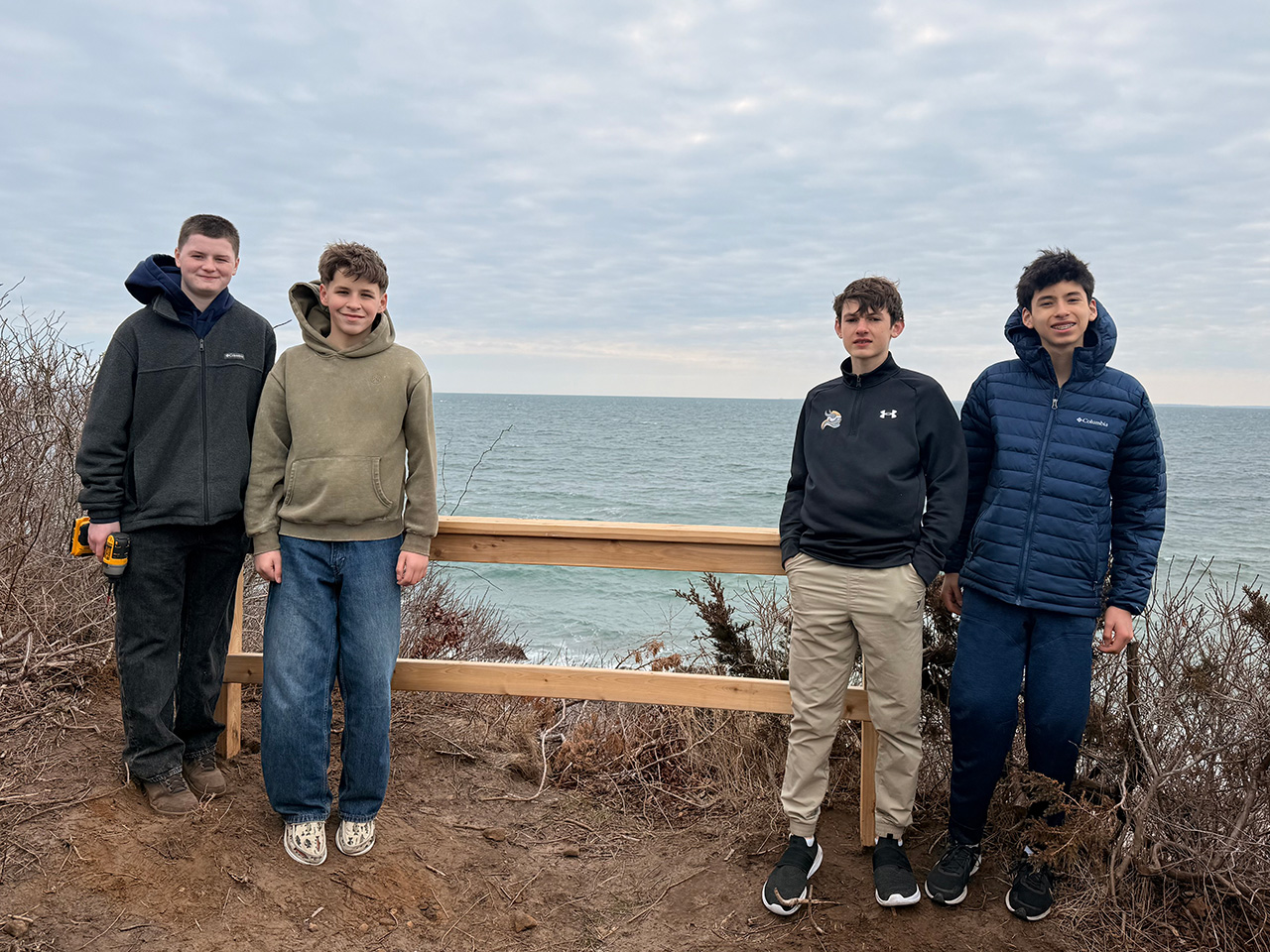
Posing by newly constructed barrier at trail overlook, March 20, 2026. Photo by Adam Murray
As a new addition, last spring we began a weekly nature program for the grades 3-6 after school club. Each week, I take students to trails and beaches all over the Island where they learn about the natural world by identifying birds, using a compass, following animal tracks, and more. The students are not only learning about the flora and fauna of Fishers Island and the interconnectedness of the ecosystems around them, but they are also building their independence and comfort in the outdoors, all while being safely supervised and guided by myself and FIS staff Caroline Toldo and Caelen Haddock.
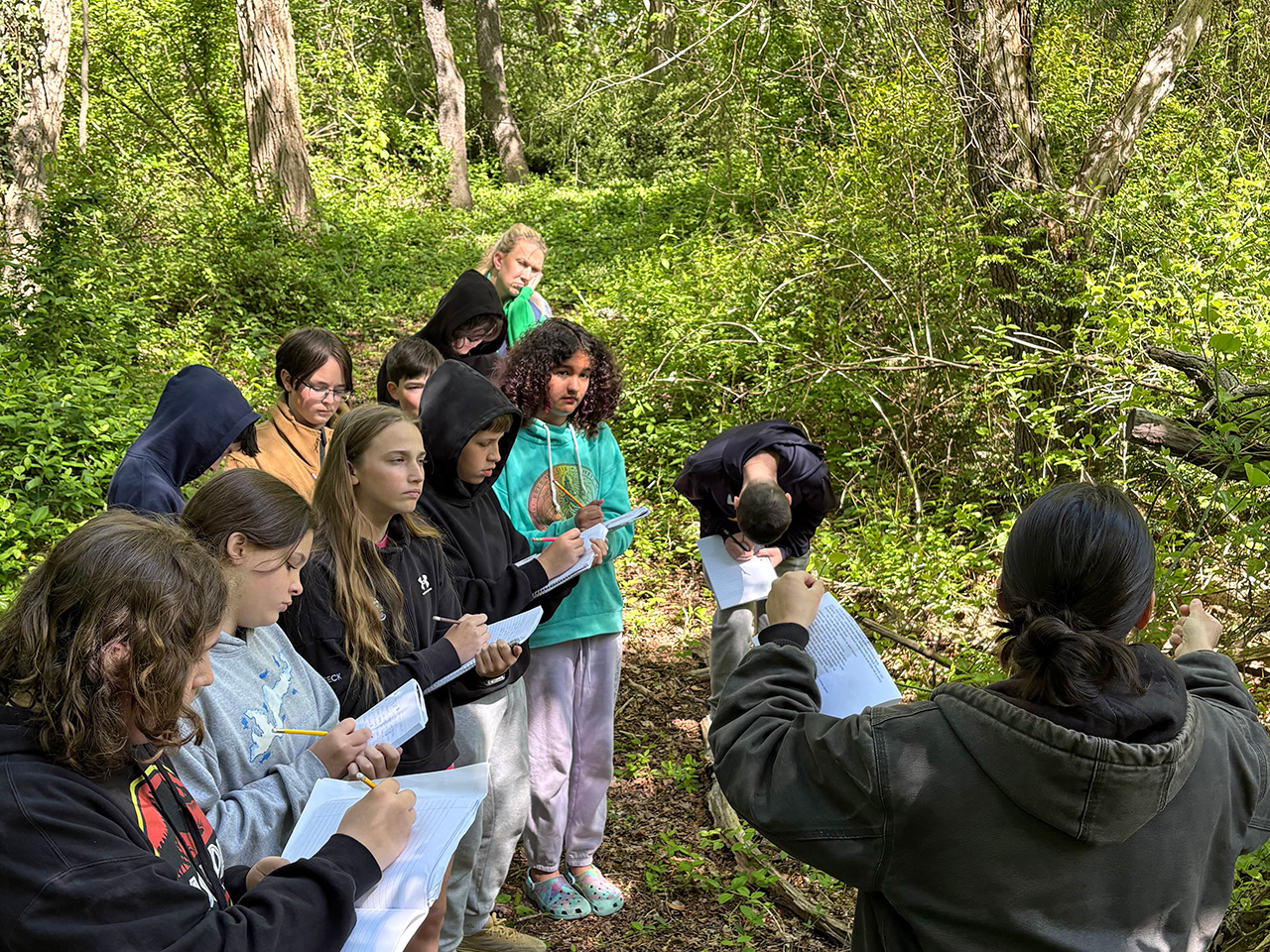
Foraging walk in collaboration with Lighthouse Works, May 20, 2025. Photo by Eliza Schmidt
At about the same time, I began a collaboration with Jen Burns and her 3rd/4th grade class. Burns brings her students on a nature walk almost every day, but by partnering, we’ve been able to take the students further afield and build broader connections to their classroom learning. Burns and I collaborate on programming, meeting to discuss New York State learning standards and relevant topics that connect with the Museum’s focus of pre-history, history, and natural history on Fishers Island. Right now, we’re working with baseplate compasses. The students think that they’re creating a hunt for buried treasure at Chocomount Beach—and they are—but they are also learning about cardinal and ordinal directions, angles, shapes, distances, and creative problem solving. “The collaboration with the Museum serves a wide variety of purposes: it gets the students outside experiencing the environment of Fishers Island, making connections with their learning in and out of the classroom, as well as establishing a sense of place. The Museum owns and maintains so many trails, and it has been fantastic for students to now know where they are and share that with their families. I find the different light bulb moments each student has, whether we are exploring the Museum or out in the field so inspiring. I can then immediately connect back to those moments in class or out on our daily nature walks.”—Jen Burns
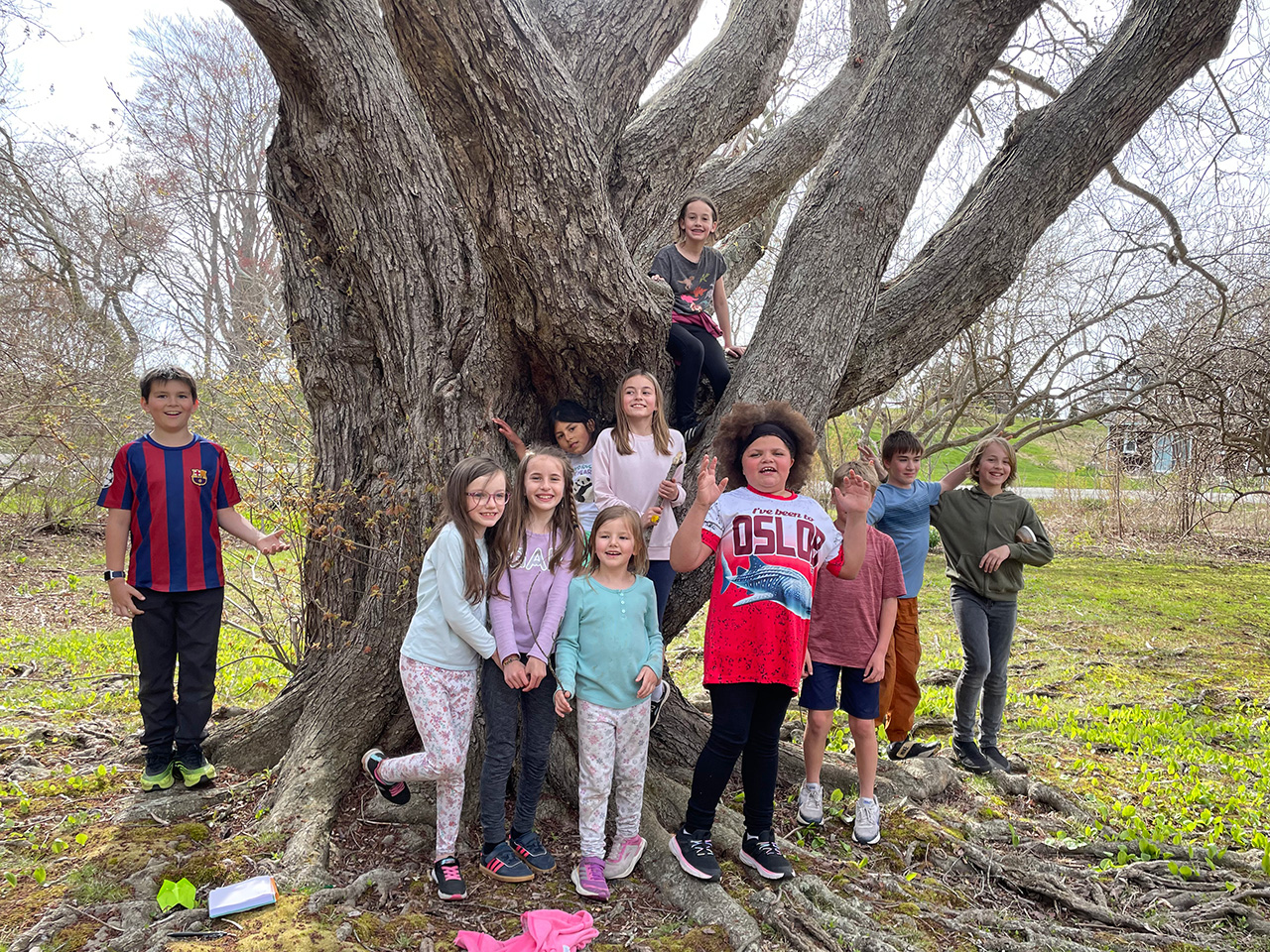
After school group in Nature Sanctuary, April 29, 2026. Photo by Jessica NeJame
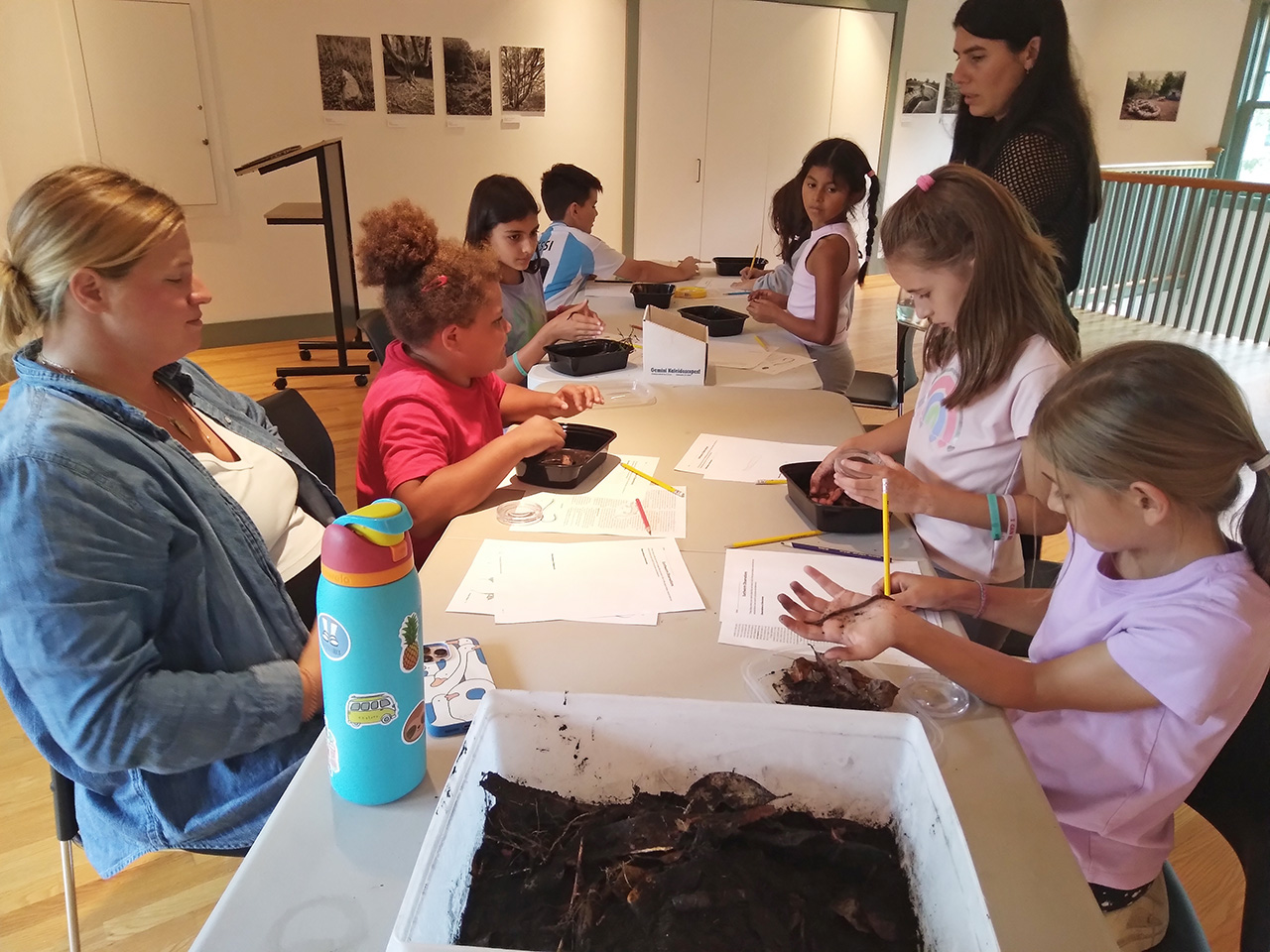
Learning about earthworms at the HLFM, October 8, 2025. Photo by Jen Burns
More connections abound. Hannah Vagts, Fishers Island Seagrass Management Coordinator, visits science teacher Michelle Zimberlin’s classroom to teach students about eelgrass, then brings them out to the ocean to help with taking samples and measurements. These collaborations don’t just benefit the students—they benefit the Museum. For example, Zimberlin’s students took water quality measurements in the Museum Sanctuary pond and found that there was no quantifiable amount of dissolved oxygen in the water, leading to our decision this fall to install an aerator to improve pond health. By involving Fishers Island students, we are increasing our capacity for stewardship.
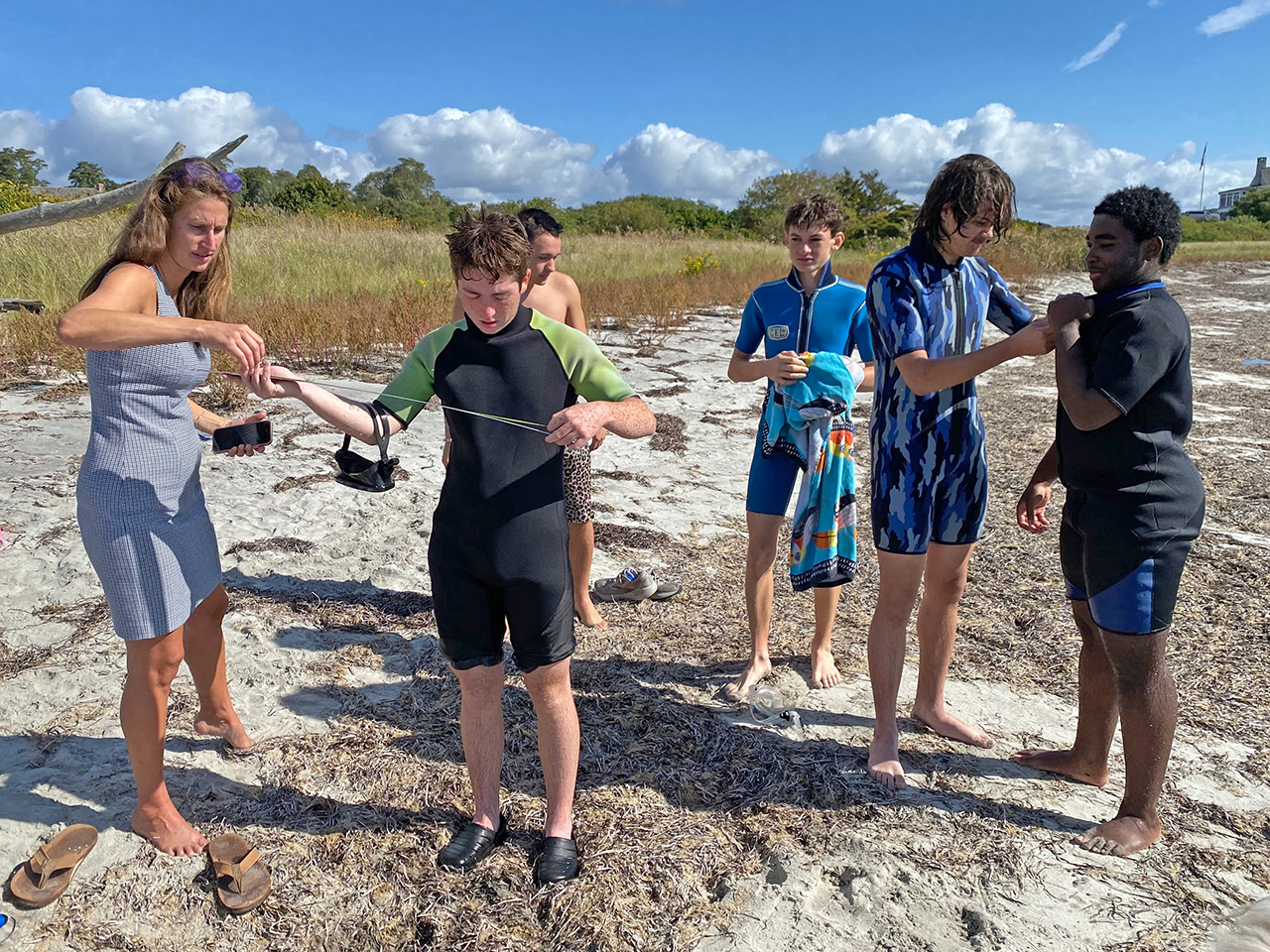
Students measuring eelgrass samples for FISM, Sept. 22, 2025. Photo by Hannah Vagts